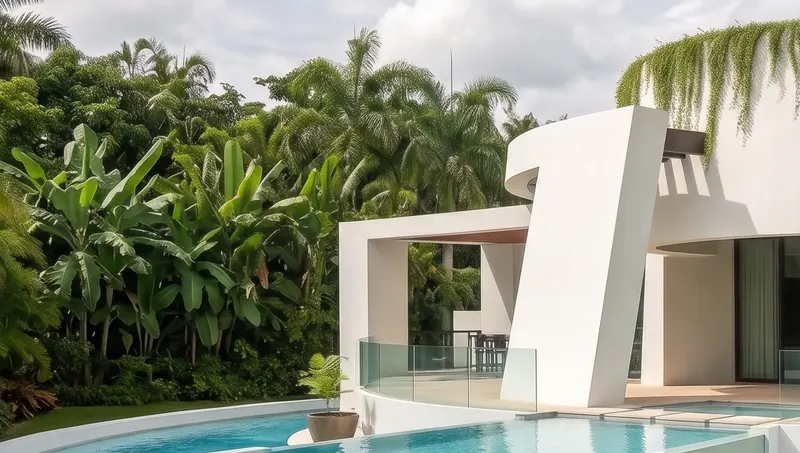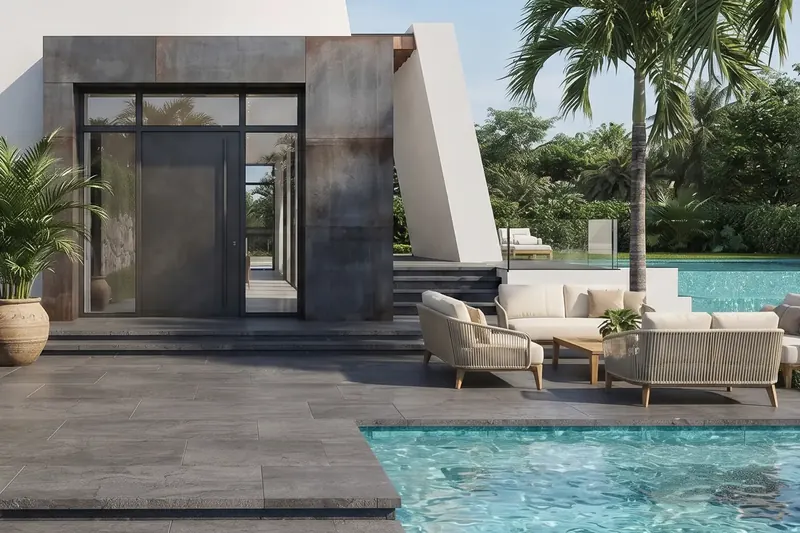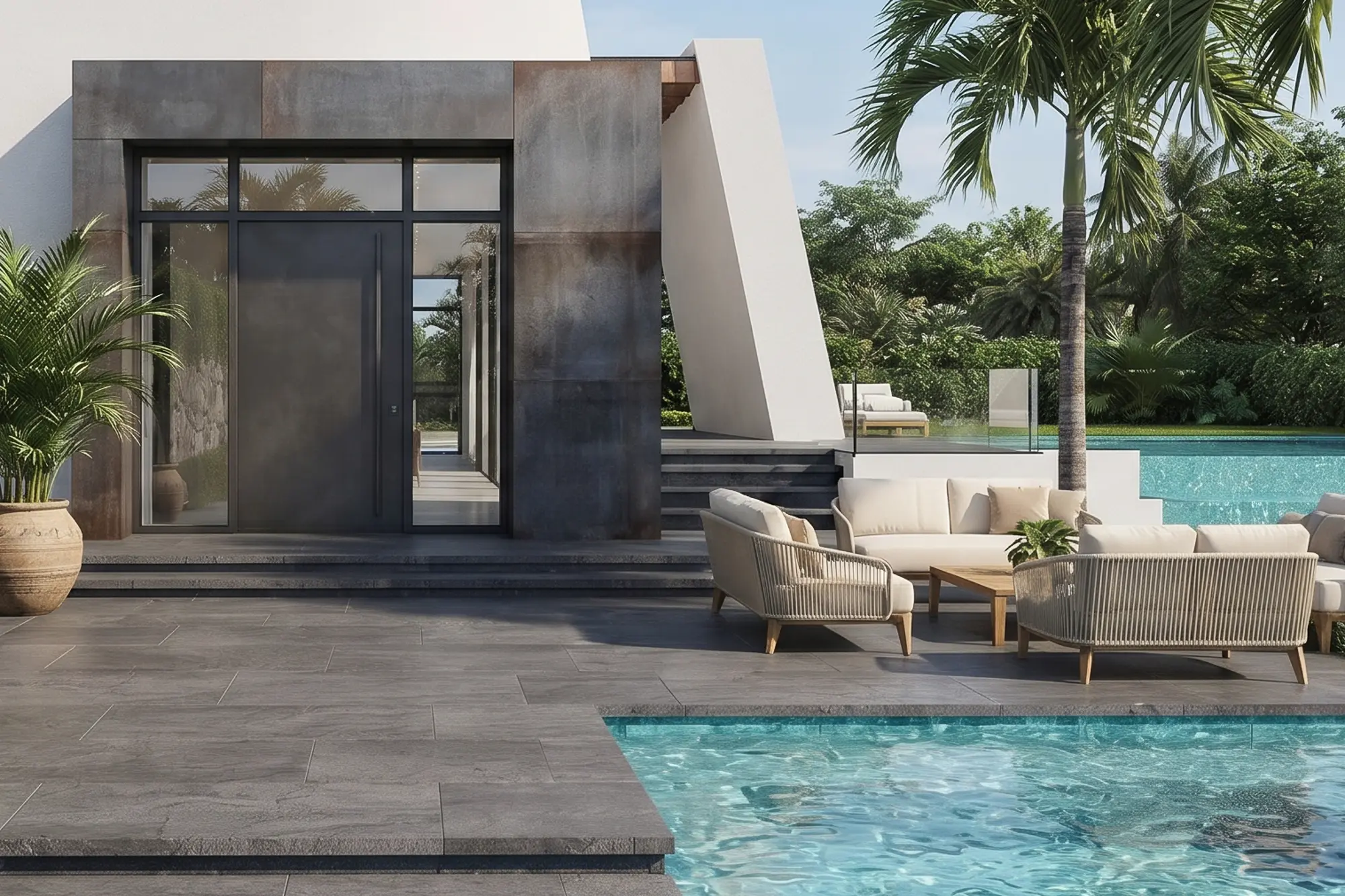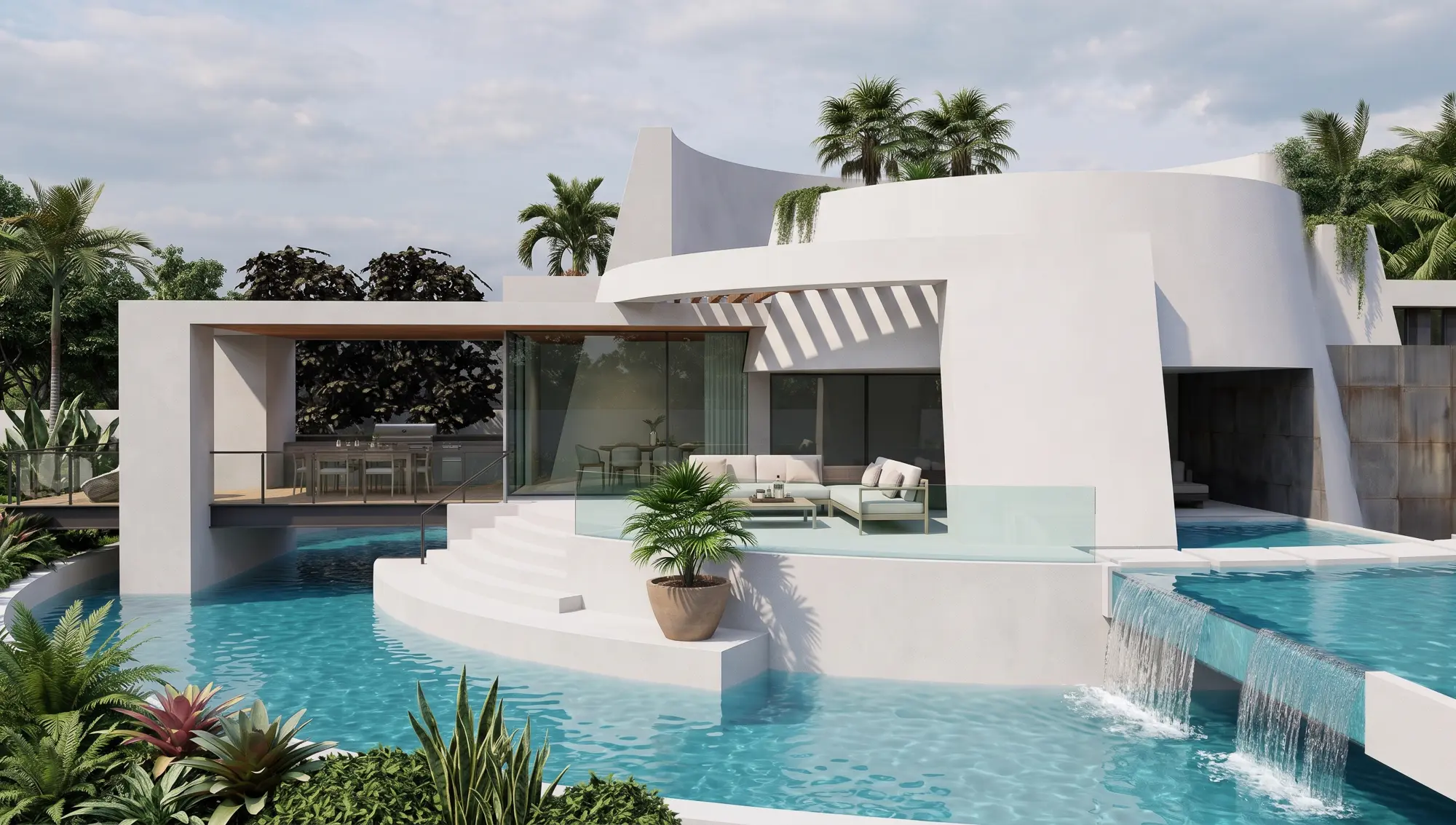
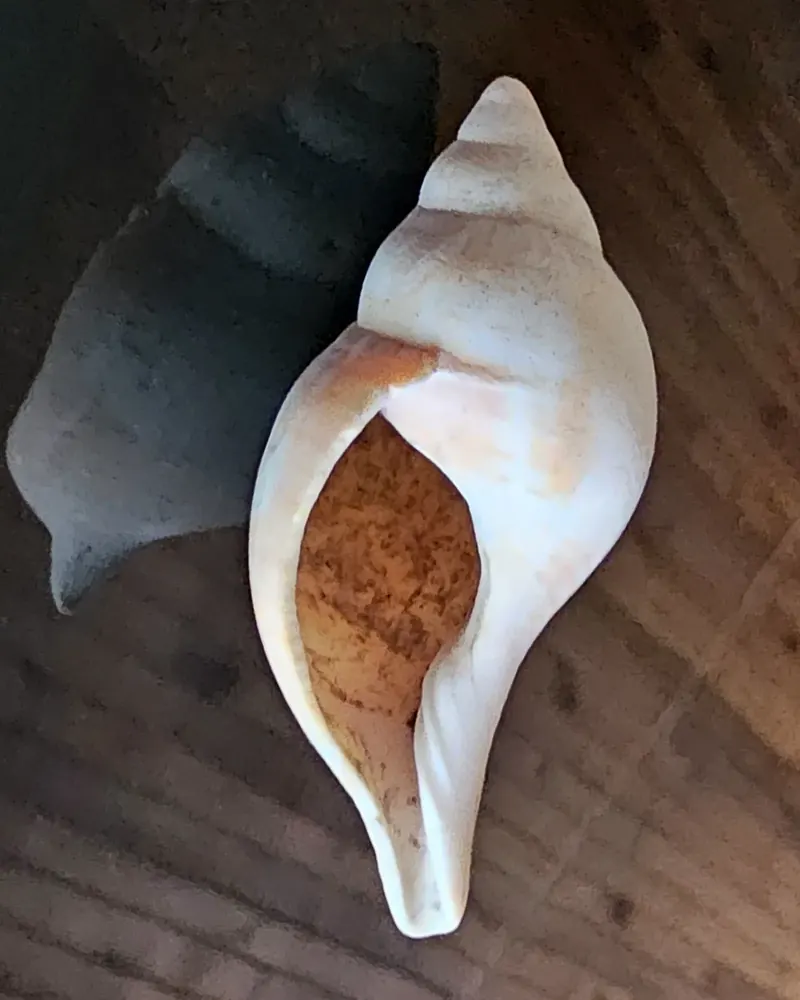
Inspired by the geometry of a conical seashell emerging from the ocean as the surf recedes, this modern Miami residence explores the relationship between sculptural architecture, water, and outdoor living. The design takes its inspiration from the protective, spiraling form of a seashell, translating its geometry into a composition of sweeping curved walls, intersecting planes, and sheltered outdoor spaces. The resulting architecture has a strong sculptural presence while remaining closely connected to the surrounding tropical landscape.
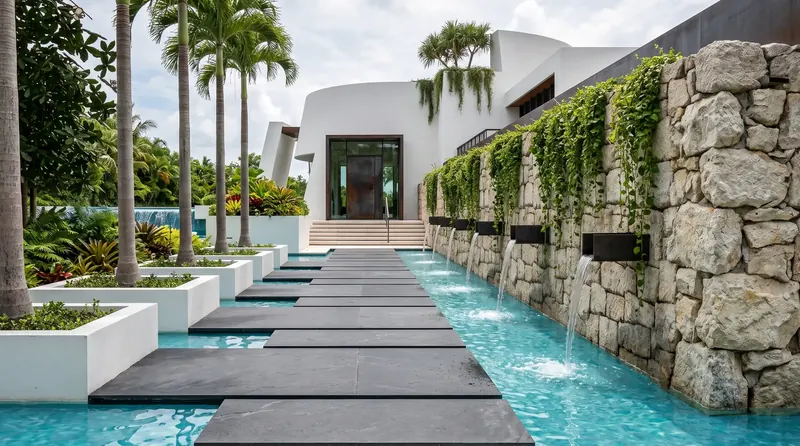
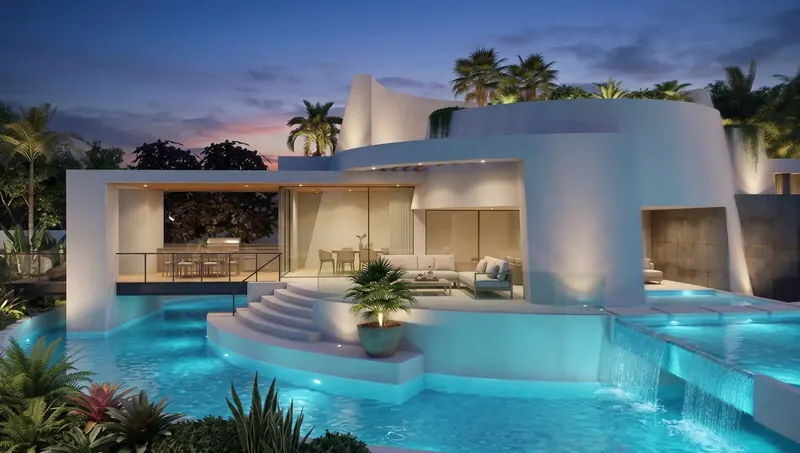
The house is organized around a central core of interior living spaces, with outdoor rooms and terraces radiating outward in response to the Florida climate. This arrangement allows the principal living areas to maintain a direct relationship with the outdoors, making the transition between interior and exterior almost imperceptible. Rather than treating outdoor spaces as secondary additions, the design gives them equal importance to the interior rooms. Dining, lounging, swimming, and entertaining become interconnected activities, each occupying its own carefully defined setting while remaining visually and physically connected to the others.
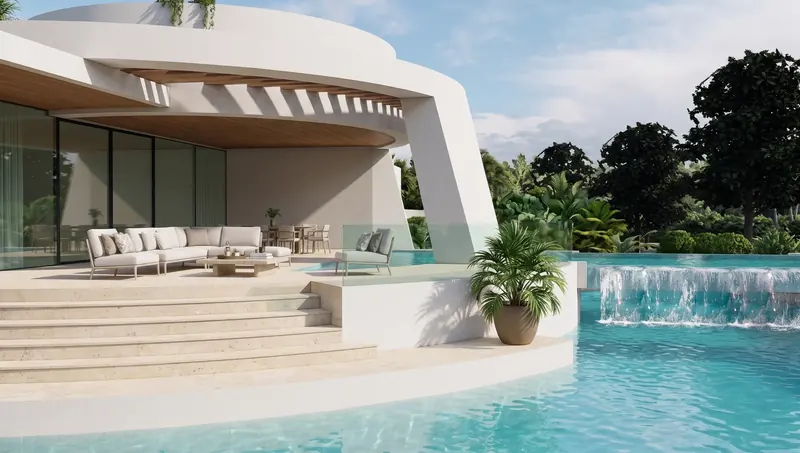
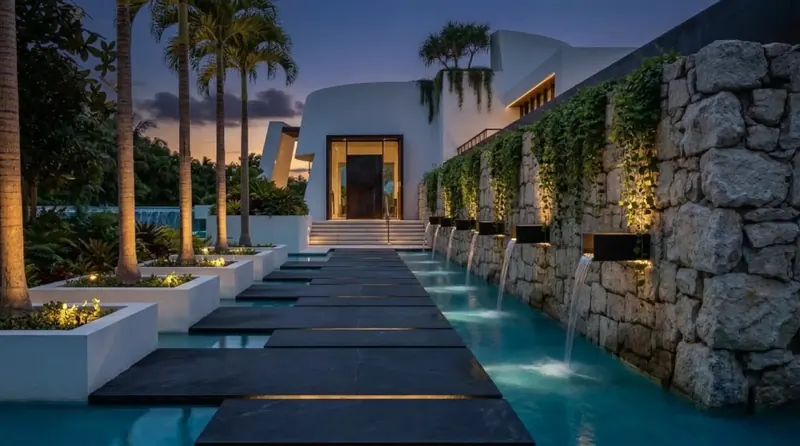
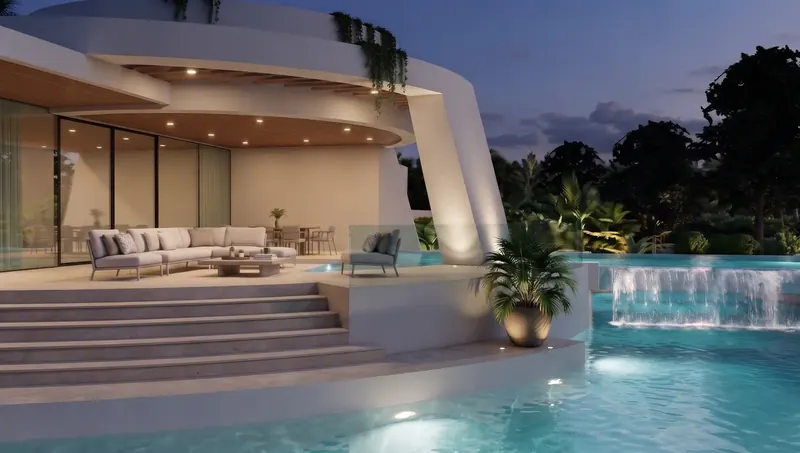
Water is an essential element of the architectural composition. A swimming pool wraps around the outdoor living areas, bringing the movement, reflections, and changing colors of water into the everyday experience of the house. Above the pool, an elevated reflecting pond extends across the architecture, creating a dramatic horizontal plane of water. At its edges, water spills downward in continuous waterfalls, forming shimmering, transparent walls on either side of a sheltered passage. This creates an unusual aquatic grotto, a cave-like environment that can be entered by swimming beneath the cascading water. The experience is simultaneously enclosed and open, with the movement and sound of water providing a sense of separation from the surrounding activity.
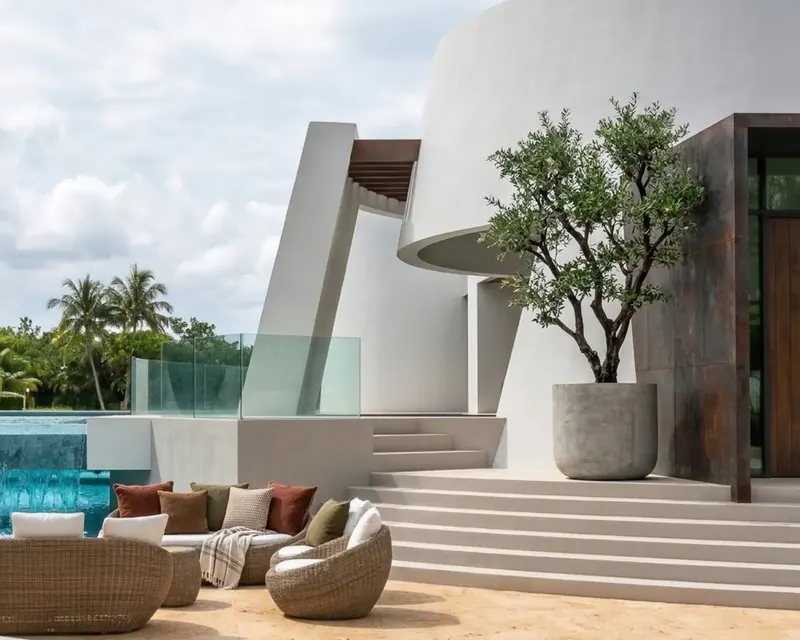
The architectural forms are carefully shaped to create a variety of outdoor environments. Broad openings connect the main living spaces to covered terraces, while projecting roof planes provide shade from the intense Florida sun. Deep overhangs and strategically positioned architectural elements offer protection without sacrificing the openness that makes outdoor living so appealing in this climate. The curved walls are not simply sculptural gestures; they also help define spaces, provide privacy, and establish a sense of enclosure within an otherwise open composition.
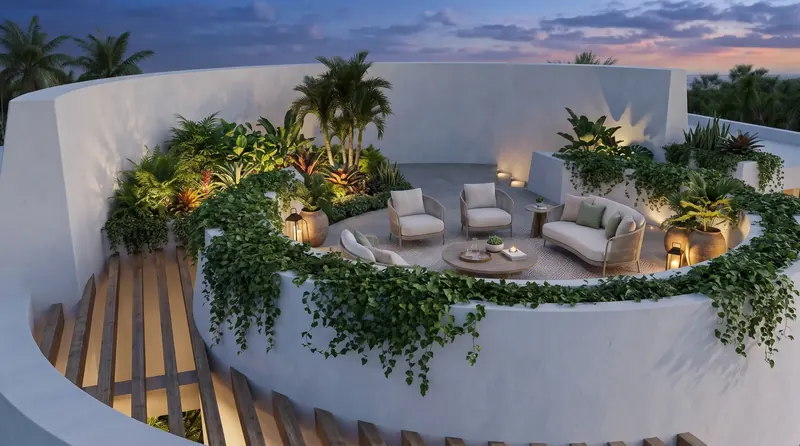
Above the main living areas, a secluded rooftop terrace provides an entirely different outdoor experience. Conceived as an intimate retreat for evening relaxation and stargazing, the terrace is enclosed by a high, gently curving wall. This wall shields the space from prevailing winds while creating a sense of intimacy and protection. Its curved geometry reinforces the seashell concept, turning the roof into a sheltered outdoor room that remains open to the sky. In contrast to the expansive pool terraces below, this elevated space offers a quieter setting for enjoying the evening atmosphere.
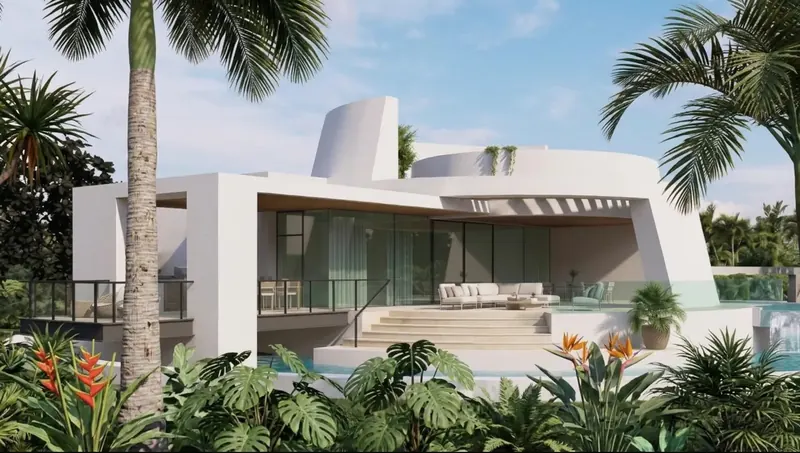
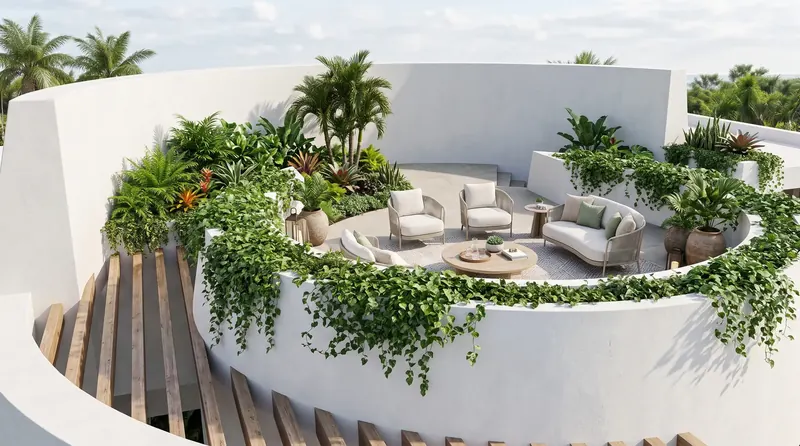
The landscape is integrated into the architecture at multiple levels. Tropical planting softens the white sculptural forms, while planted roof areas introduce greenery above the main living spaces. Palms, cascading vegetation, and carefully positioned planting beds establish a connection to the surrounding landscape and temper the geometry of the building. The interplay of white architectural surfaces, lush greenery, and blue water creates a consistent visual language throughout the property.
Even the arrival sequence is carefully considered. Automobiles are accommodated in a separate court, discreetly removed from the principal outdoor living areas. This separation allows the architecture, gardens, and water features to define the experience of the residence rather than the practical requirements of parking and vehicle circulation.
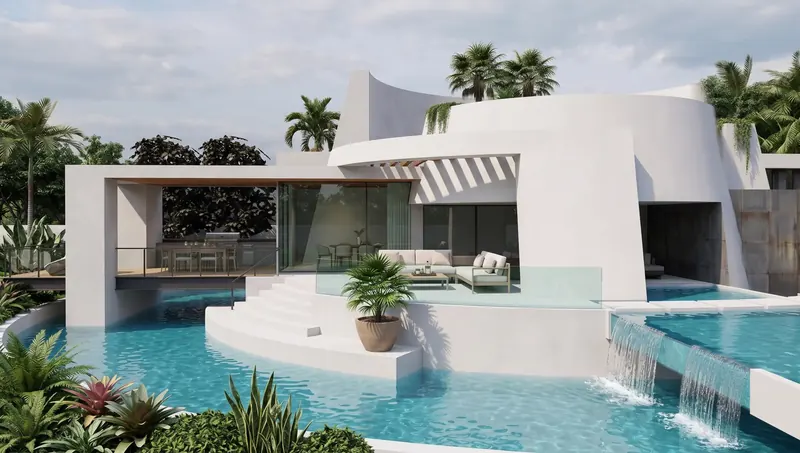
The result is a home conceived around the pleasures of the Florida climate and the sensory qualities of its environment. Its architecture is shaped as much by the movement of water, the direction of the sun, and the need for shelter as by the arrangement of interior rooms. From the expansive poolside terraces to the sheltered aquatic passage and secluded rooftop retreat, the house offers a series of distinct experiences organized around a common idea: living in close connection with water, sky, and the outdoors.