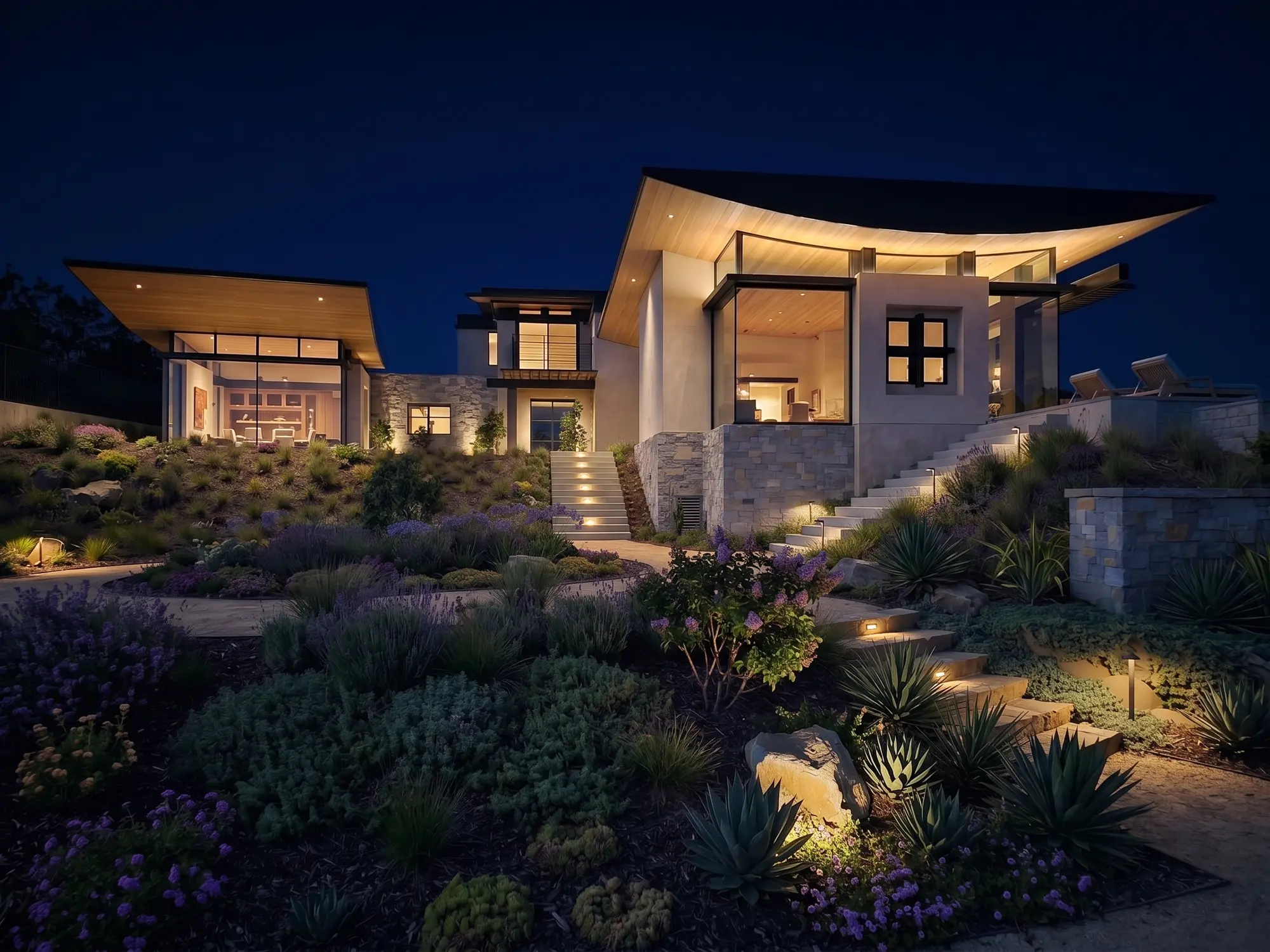
There is no single price for a custom home, which is part of what makes budgeting difficult. Costs depend on where you build, how large and complex the house is, and how it is finished. This guide explains how to think about the numbers.
Cost per square foot: a starting point
Builders and architects often talk about cost per square foot, but the range is enormous. As a very rough guide, construction alone for a custom home in the United States can run from a few hundred dollars per square foot for modest, simpler homes to many hundreds of dollars per square foot for high-end architect-designed residences, and well beyond in expensive markets and on difficult sites. Luxury homes with extensive custom detailing, premium materials, and complex engineering sit at the top of the range.
Because costs change with materials, labor, and region, always get current numbers from local builders. Treat any national average as a rough orientation only.
What affects the cost most
Location. Labor and material costs vary widely. Remote, island, mountain, and resort locations are often considerably more expensive because of transportation, limited labor, and shorter building seasons.
Site conditions. Steep slopes, rock, poor soils, high water tables, and limited access all raise foundation and excavation costs. Utilities may need to be brought in from far away.
Size and complexity. Large cantilevers, curved walls, vaulted ceilings, and expansive glass cost more than simple forms. Interestingly, per-square-foot costs often rise as homes get more complex, not just bigger.
Materials and finishes. Natural stone, custom steel and glass, reclaimed timber, high-end appliances, and bespoke millwork can push costs well above standard finishes.
Level of customization. One-of-a-kind features take more design time and more specialized labor than standard components.
Systems. Geothermal heating, radiant floors, smart-home technology, elevators, and pools add to the total.
Beyond the construction cost
The building contract is only part of the budget. Plan for:
- Land and site work. Purchase, clearing, grading, driveways, utilities, septic or sewer
- Design fees. Architect and engineers. See our guide to architect fees
- Permits and impact fees
- Interior design, furnishings, and window coverings
- Landscaping, hardscape, pools, and outdoor living areas
- Financing costs and insurance during construction
- A contingency of about 5–10% for surprises
It’s common for these “other” costs to add a significant percentage to the construction price, so budget for them from the start.
How to plan a realistic budget
- Decide your total budget, not just the construction cost. Include land, fees, furnishings, and a contingency.
- Be honest with your architect. A candid budget lets the architect design for what you can afford, rather than creating something that must be cut back later.
- Get early cost feedback. Having a builder or cost estimator review the design at the schematic and design development stages catches problems while changes are still inexpensive.
- Prioritize. Decide what matters most, such as a view, a great kitchen, or exceptional materials, and where you can economize.
- Keep a contingency. Unexpected conditions are normal in construction. A contingency prevents them from becoming a crisis.
Ways to manage cost without compromising design
- Simplify the form while keeping great proportions and light
- Focus the budget on the spaces you use and see most
- Use high-impact materials selectively rather than everywhere
- Design for a good site relationship, which often saves on excavation and enhances the view
- Phase landscape or secondary spaces for later
Thoughtful design is often less about spending more than about spending well.
Talk numbers early
The most valuable step is an open conversation about your goals and budget before design begins. Contact Bjella Architects to discuss your project, or read about our custom home design services. For timing, see how long it takes to design and build a custom home.