Choosing an architect is the most important decision you will make on a custom home. You will work closely together for a year or more, often longer, and the design will shape your daily life for decades. Here is a practical way to approach the choice.
1. Start with the work, not the résumé
Browse portfolios and ask yourself which homes you respond to emotionally. Do not worry yet about whether you can articulate why. Look for:
- Range. Does the firm have a distinctive point of view, or does every house look the same? The best residential architects design for the client and the site rather than repeating a signature.
- Quality of detail. Look beyond the exterior photographs. Are the interiors, lighting, and landscape as considered as the architecture?
- Similar projects. Has the firm designed homes in climates, terrain, and budgets like yours?
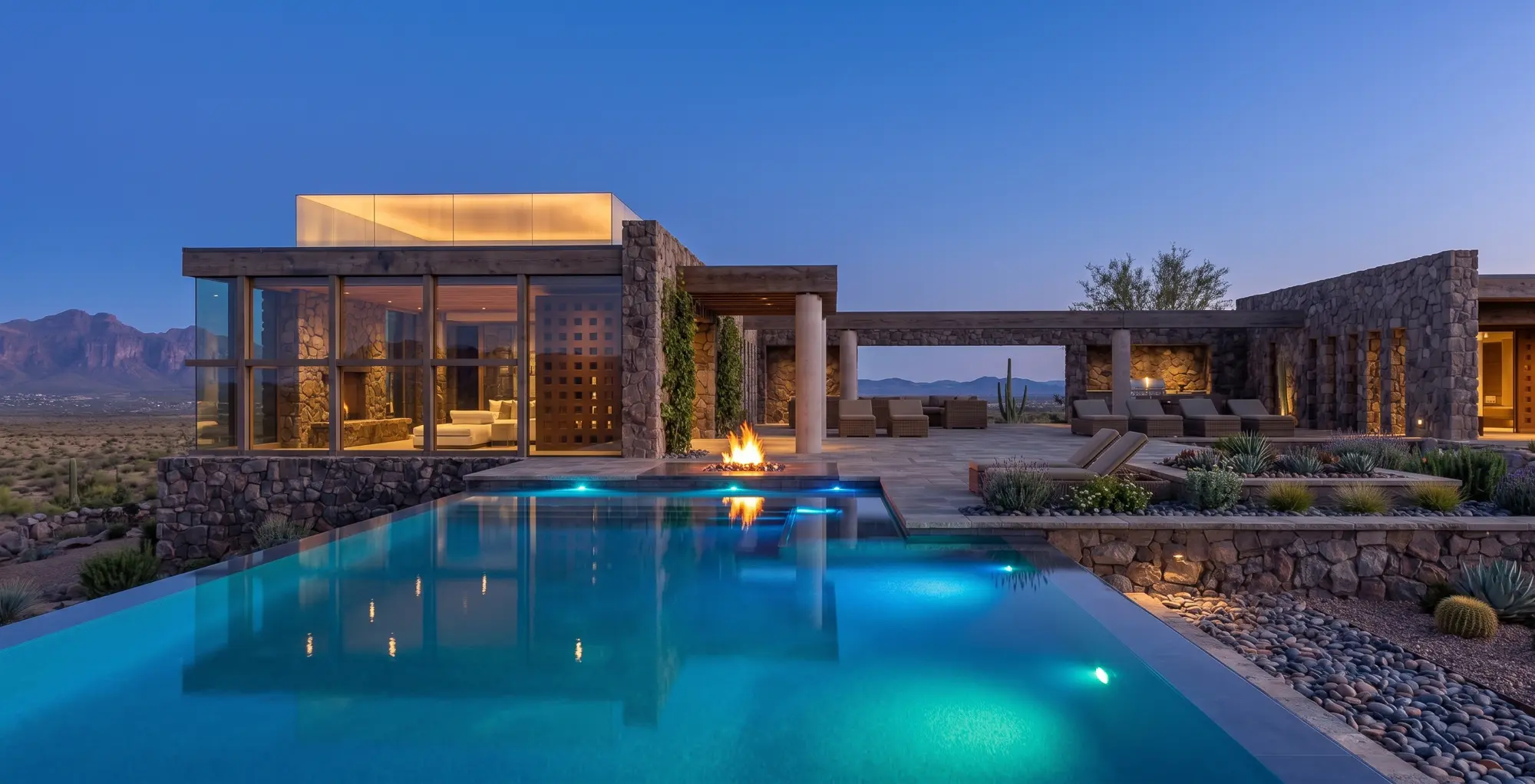
Our own gallery spans mountain lodges, desert villas, beach houses, urban lofts, and lake retreats, each designed for its climate, site, and view.
2. Look for experience that matches your project
Longevity is not everything, but it signals stability and a history of solving problems. Ask how many residential projects the firm has completed, how many were similar to yours, and whether the same people who pitch the project will design it.
That last question matters. In some firms, a principal wins the work and a junior team executes it. At Bjella Architects, every home is designed personally by the founder, which is worth asking about at any firm you consider.
3. Ask about the full scope of services
Some firms design the building and hand off the rest. Others handle architecture, interiors, lighting, and landscape together. Neither is wrong, but you should know which you are getting. A single, integrated team can create a more cohesive home and avoid the gaps that appear when several designers work separately.
4. Understand the process
A good architect can describe, clearly and simply, how a project unfolds from first conversation to move-in. Ask:
- What are the phases, and what do I receive at the end of each?
- How many design options will I see?
- How do you handle changes and revisions?
- How involved will you be during construction?
You can read about how we work on our Process page.
5. Talk candidly about budget and fees
An honest architect will ask about your construction budget early and tell you if your expectations and your budget do not align. Ask how fees are structured, what is included, and what would be billed separately. Our guide to what an architect costs for a custom home explains the common models.
6. Pay attention to chemistry
You will make hundreds of decisions together, some of them personal. Do you feel listened to? Does the architect ask good questions about how you live, rather than only describing what they want to build? The best projects come from a real collaboration, and a good first conversation is a strong sign.
7. Check credentials and recognition
Confirm that the architect is licensed in the state where the home will be built, or that the firm has a plan to work with a locally licensed architect where required. Publication in respected magazines and design awards can also indicate peer recognition, though they are only one signal among many. Our work has appeared in publications including Architectural Digest, Better Homes & Gardens, and Residential Architect.
Red flags
- Reluctance to discuss fees or contracts in writing
- No clear answer about who will do the design work
- A portfolio where every house looks identical regardless of client or site
- Pressure to sign quickly
- Vague descriptions of the process
A simple way to begin
Shortlist two or three firms whose work moves you, have an introductory conversation with each, and ask the same questions of all of them. You will quickly learn who listens, who explains clearly, and who you can imagine working with for the length of a project.
If you would like to start that conversation, contact Bjella Architects. Every home begins with one.