Short answer: “Custom” is one of the most overused words in residential building, and it often means much less than people assume. Hiring an architect is worth the cost because an architect designs around you, not around a catalog.
The word “custom” has been stretched
Many homes sold as “custom” are really customized. A builder or designer starts with an existing plan, or a library of them, and lets you adjust it. You might get a different kitchen layout, an extra bedroom, a choice of exterior finishes or a few window upgrades. The underlying house is still a product that was designed before you showed up.
That isn’t necessarily bad. It can be faster and simpler, and sometimes cheaper. But it’s worth knowing what you’re buying. If the starting point is a plan drawn for no one in particular, the result will be a house that fits a generic buyer reasonably well and you only approximately.
Here are some signs that “custom” may mean “customized”:
- The process begins with picking a plan from a portfolio.
- Changes are limited to a menu of options.
- The site is an afterthought. The house gets placed on the lot, rather than shaped by it.
- Your daily routines, habits and history never come up in conversation.
- The house could be built almost anywhere with only minor changes.
What truly custom looks like
A truly custom home starts with a blank page and with questions. How do you move through a morning? Where does the light fall on your lot at 5 p.m. in December? What do you love about where you live now? What do you wish it did differently?
The answers become the design. Here’s an example from our Modern Zen Mountain House in Calabasas, California.
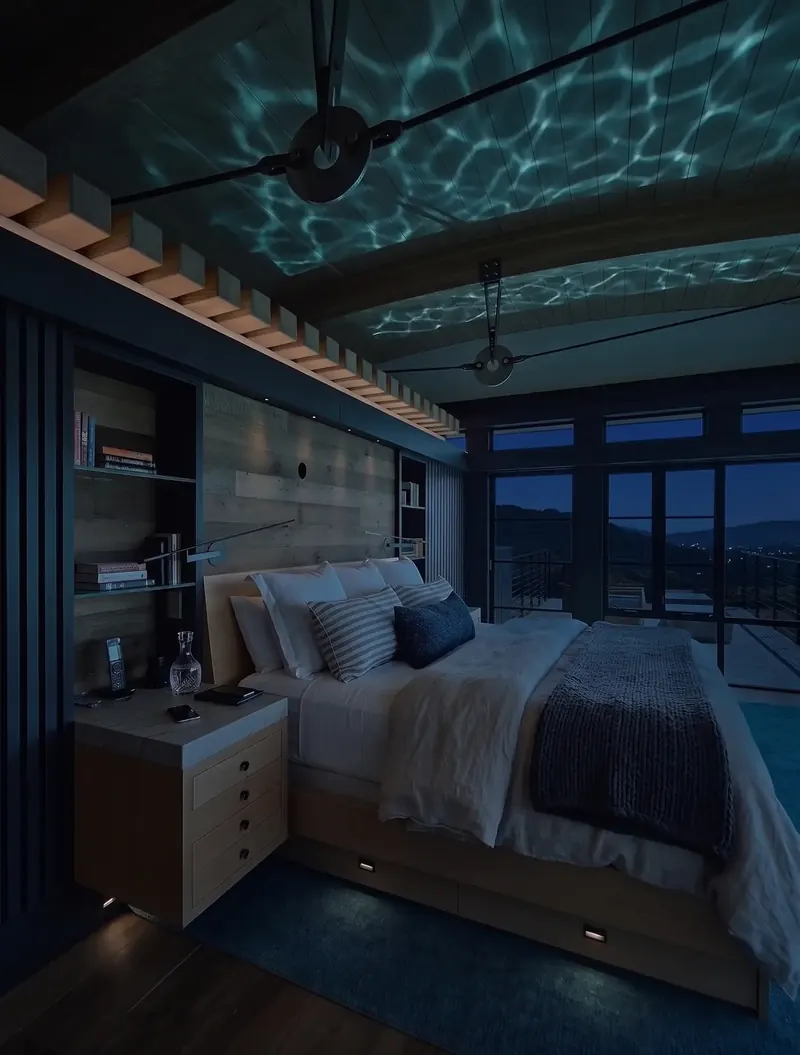
A bedroom designed around a streetlight
The owners’ previous home had an unusual and unplanned feature. An old streetlight, since removed, bounced light off the pool, up through a window, and onto the bedroom ceiling, where it danced and shimmered. The couple fell asleep to that light show every night.
You will not find that in a plan book. No catalog has a “shimmering ceiling” option, and no builder would have thought to ask about it. It was an accident of the old house that had become a cherished part of how these two people lived.
So we made it the starting point for the new bedroom. We placed the primary bedroom on the second level, at the opposite end of the pool, and positioned the bed and windows so they line up with the water. Then we added a calculated light at the end of the pool that rises into place automatically at night. Bed location, window placement and a little trigonometry recreate the effect that the owners loved.
Nobody would have specified that on a requirements list, and an off-the-shelf design would never have produced it. It happened only because someone listened closely enough to notice what mattered and had the training to turn it into architecture. It was a feeling the owners loved, translated into geometry, and it led the entire design of the room.
Why that’s worth paying for
An architect’s fee is not mainly paying for drawings. It pays for the thinking that happens before them:
Listening and translating. Clients rarely arrive knowing what they want. They arrive with fragments: a memory, a mood, a frustration. Turning those into a coherent home is a skill.
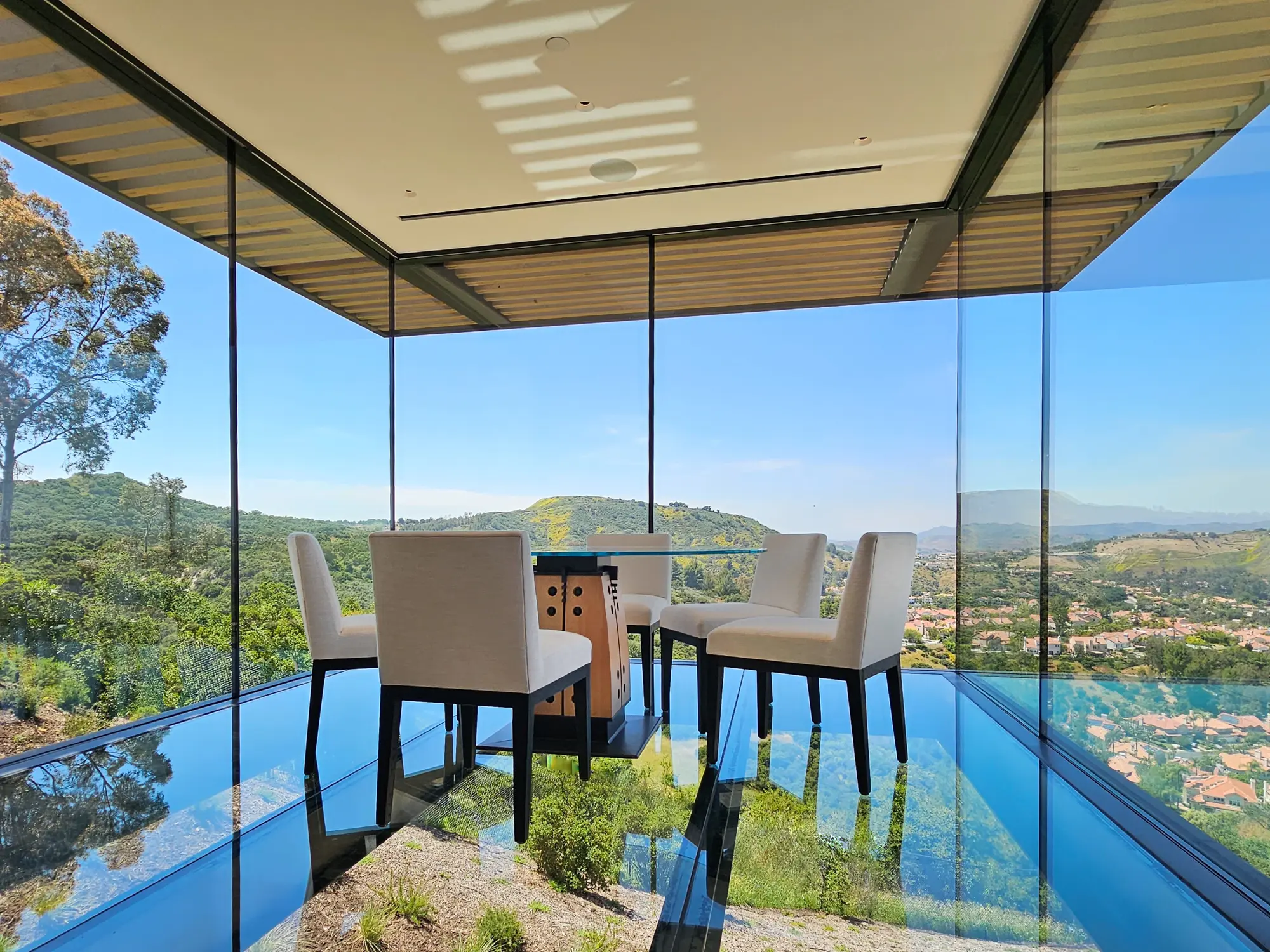
Designing for the site. Sun, slope, views, wind, privacy and neighbors differ on every lot. A house that responds to all of them feels different from one that ignores them. In Calabasas, capturing the sunset from a glass dining room cantilevered over the hillside was non-negotiable, and the dinner schedule at that house now bends around it.
Details at every scale. Good architecture works from the macro to the micro, from the shape of the roof to the profile of a door frame or a cabinet knob. The goal is a home that is beautiful and complete before the furniture arrives.
Solving problems before they get built. Coordinating structure, light, mechanical systems and budget on paper is far cheaper than discovering conflicts on site.
An advocate on your side. The architect works for you, not for a builder’s margin or a product line.
So is it worth it?
If you want a good house, a well-run builder with a solid plan can deliver one. If you want a house that is unmistakably yours, the kind where one room exists because of a light that once reflected off a pool, an architect is how you get there. You’re not paying for more house. You’re paying for a house that fits.
The simplest test of whether something is truly custom is to ask: “What in this design exists only because of me?” If the answer is a long list, it’s custom. If it’s a few finishes, it’s customized.
Considering a home designed around how you actually live? Start the conversation with us.