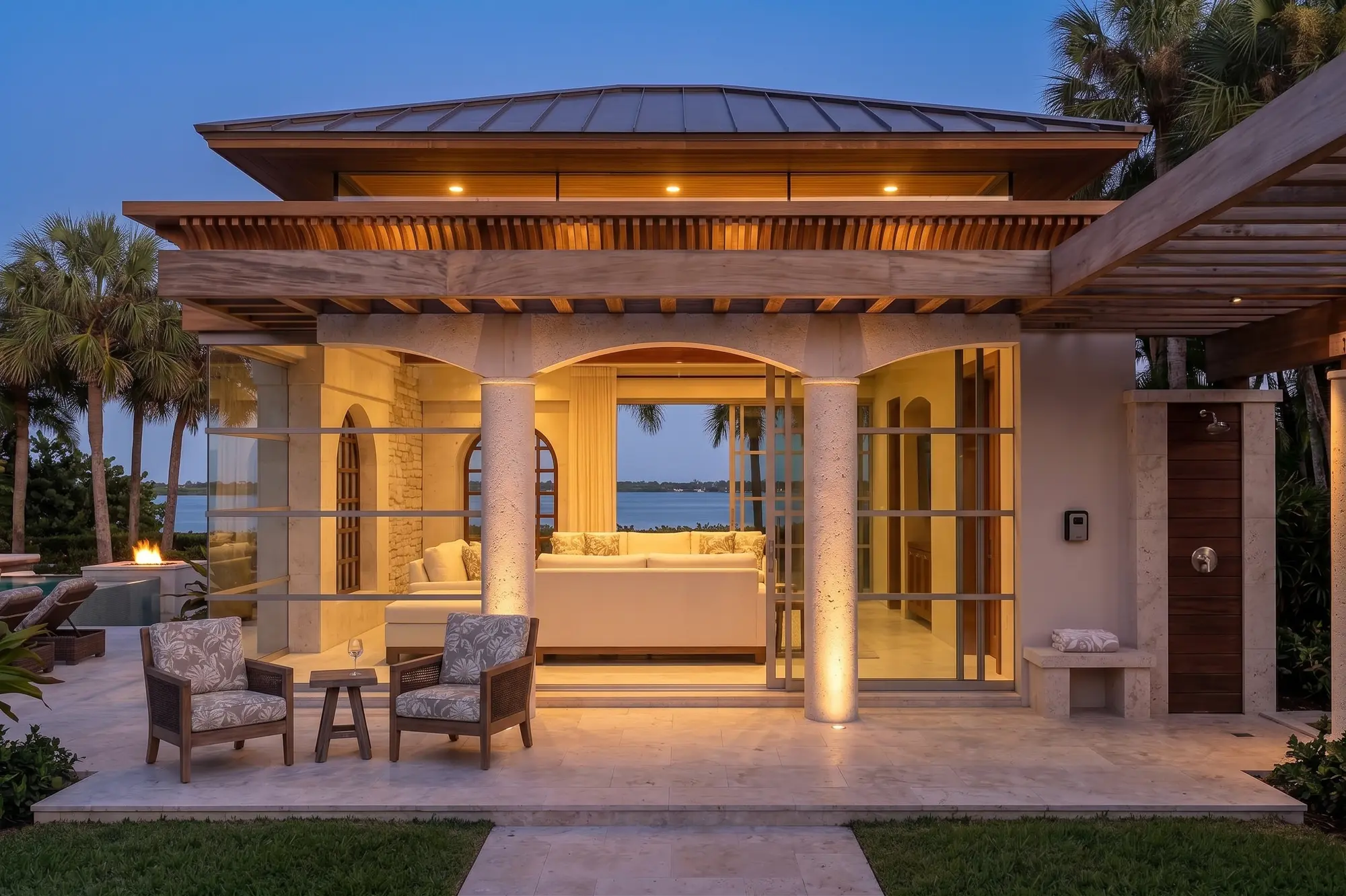
In everyday conversation, “modern” and “contemporary” are used interchangeably, and “classical” is often reduced to columns and symmetry. Architects use the words more precisely, and knowing the differences will help you describe what you want when planning a custom home.
Modern architecture
Modern architecture is a specific historical movement. It emerged in the early twentieth century and flourished through the middle of the century, led by figures like Le Corbusier, Mies van der Rohe, Walter Gropius, and Frank Lloyd Wright. It was a deliberate break from ornament and historical imitation.
Key characteristics
- Clean lines and simple geometric forms
- Little or no applied decoration
- Open floor plans that flow between spaces
- Large expanses of glass that connect the house to its surroundings
- Honest expression of materials such as steel, concrete, glass, and wood
- The idea that form should follow function
Related movements include Bauhaus, International Style, and mid-century modern, the warm, residential interpretation popular from the 1940s through the 1960s.
Contemporary architecture
“Contemporary” simply means of the present. It describes architecture being designed now, and it is not a fixed style. Contemporary homes can borrow freely from modernism and many other traditions, and they change as tastes, technologies, and priorities change.
Typical contemporary features
- Fluid, sometimes curved or sculptural forms
- Mixed materials, such as stone, metal, glass, and warm wood
- Large windows and strong connections to outdoor living
- Sustainable systems and high-performance building envelopes
- Greater emphasis on comfort, warmth, and personal expression than strict modernism
A useful shorthand: modern is a period, contemporary is a moment. A house built in 1955 in the modern style is modern. A house built this year may be contemporary, and it may also draw on modernism.
Classical architecture
Classical architecture traces back to ancient Greece and Rome and has been reinterpreted for more than two thousand years, in Renaissance villas, Georgian townhouses, and countless other traditions.
What defines it
- Proportion. Relationships between parts of the building that follow harmonious ratios
- Symmetry and balance. A sense of order and equilibrium
- Hierarchy. Clear emphasis on entrances, principal rooms, and focal points
- The orders. Columns, capitals, and entablatures, in recognizable systems
- Craftsmanship. Carefully detailed stone, wood, and plaster
Importantly, classical architecture is about more than columns. Its deeper idea is that beauty comes from order, proportion, and harmony, principles that don’t belong to any one era.
How they compare
| Modern | Contemporary | Classical | |
|---|---|---|---|
| Era | Early to mid 20th century | Today | Ancient origins, revived many times |
| Ornament | Minimal | Varies, often restrained | Often rich and detailed |
| Form | Geometric, functional | Fluid, varied | Symmetrical, proportioned |
| Materials | Steel, glass, concrete | Mixed, often natural and high-tech | Stone, wood, plaster |
| Core idea | Form follows function | Responds to present needs | Beauty through proportion and order |
Can styles be combined?
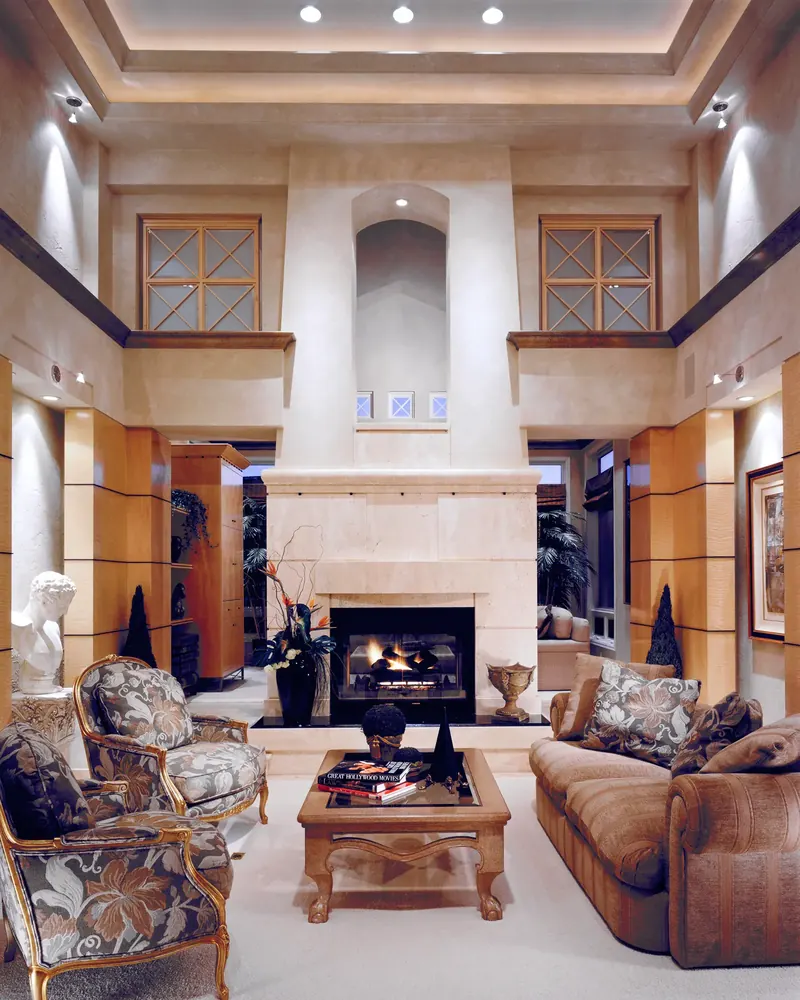
Absolutely, and some of the most enduring homes do exactly that. A house can have the open plan, generous glass, and clean detailing of modern architecture while following classical principles of proportion, axis, and balance. Light, views, and craftsmanship tie them together.
This blend is central to our work at Bjella Architects: fresh, modern forms informed by classical principles, with spaces that are open and light-filled and rooted in their sites. You can see the range in projects like the Classical Italian Villa, the Concrete Arch Home, and the Modern Glass Beach Home, each distinct, but all designed around proportion, light, and place.
Other terms you may hear
- Transitional. A blend of traditional and contemporary elements, often with softer, warmer detailing
- Minimalist. An extreme edit of modernism, with pared-back forms and few elements
- Organic. Architecture that grows from its site, associated with Frank Lloyd Wright
- Prairie, Craftsman, Mediterranean, Tudor. Regional and historical styles with their own vocabularies
How to figure out what you like
Don’t worry about labels at the start. Instead:
- Collect images of homes, rooms, and details you respond to, without overthinking why.
- Look for patterns. Do you notice warmth, symmetry, glass, texture, or light?
- Think about how you want to feel at home, rather than what style it is.
- Share it with your architect. A good architect will translate your references into a design that is original to you.
Style should respond to the site, the climate, and the way you live. A home in the desert, on a lake, or in the mountains will ask for different answers, even when the underlying philosophy is the same.
To see how we approach this, explore our custom home design services or contact Bjella Architects to begin a conversation about your own house.