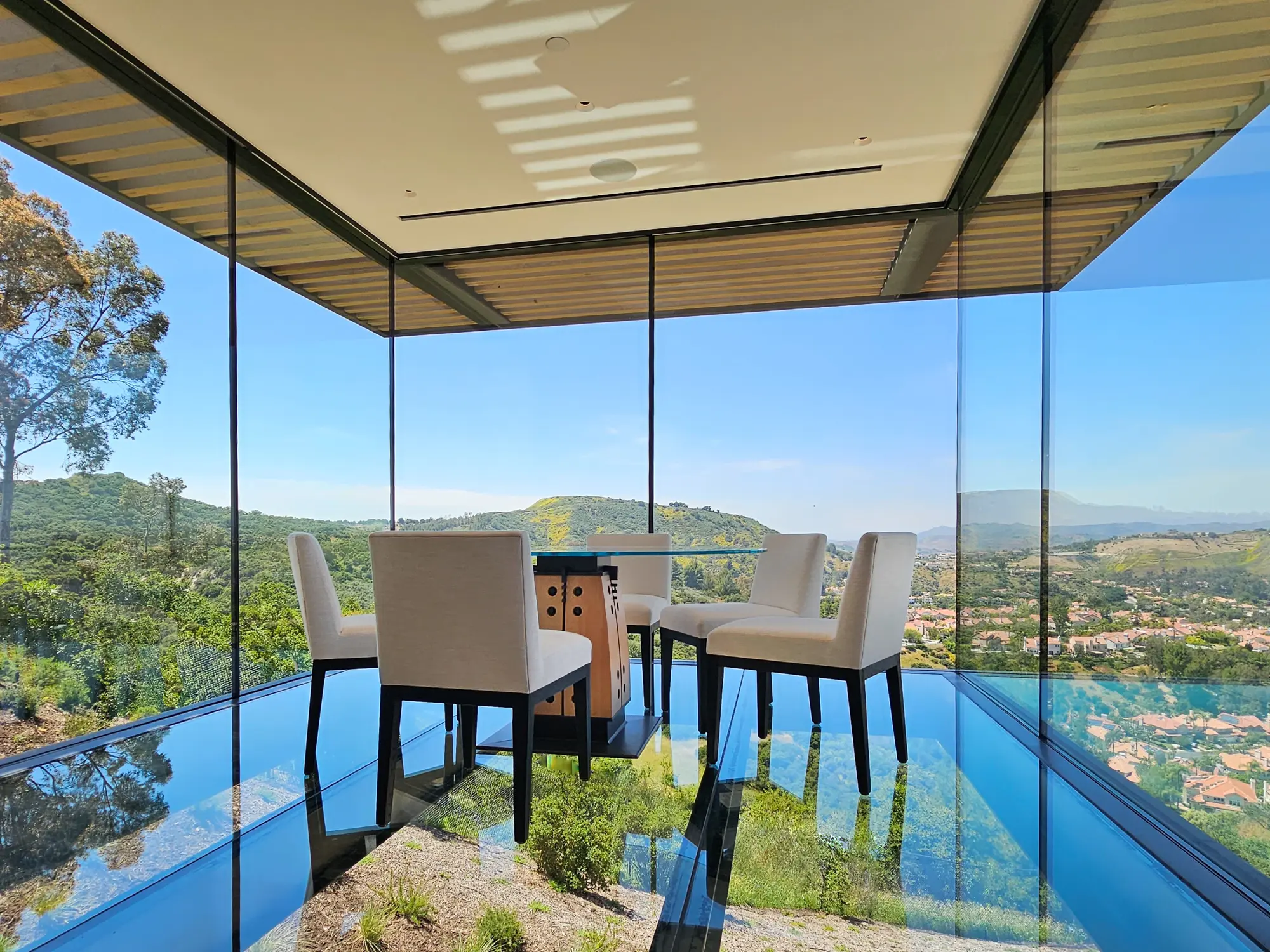
So your site has a view. Just add a picture window? Not quite. Capturing a view can be as simple as adding windows, but doing it well takes much more than that.
Our Modern Zen Mountain House in Calabasas, California is a case study in the strategies we use when designing a home around its view. Here are forty of them, each shown where we put it to work in the house.
Design strategies
Frame a view
A single window placed in the right location on a wall can turn the window into a live picture frame. Even a small window done well can be very dramatic.
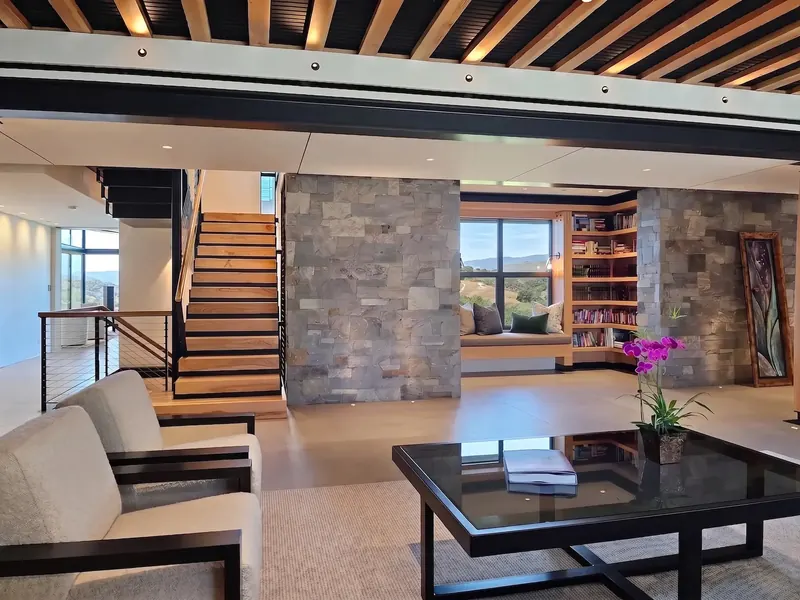
Share views between rooms
Arrange rooms in an open plan so multiple spaces can benefit from the other space’s windows.
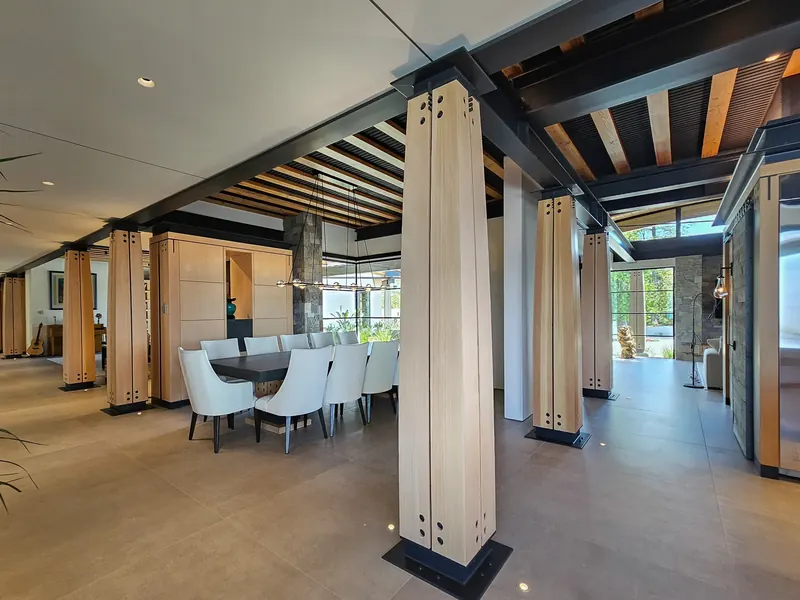
Hint at an upcoming view
Instead of displaying the entire view to guests arriving at the home’s entry, for example, build up to it by showing glimpses through a small window or from behind a screen.
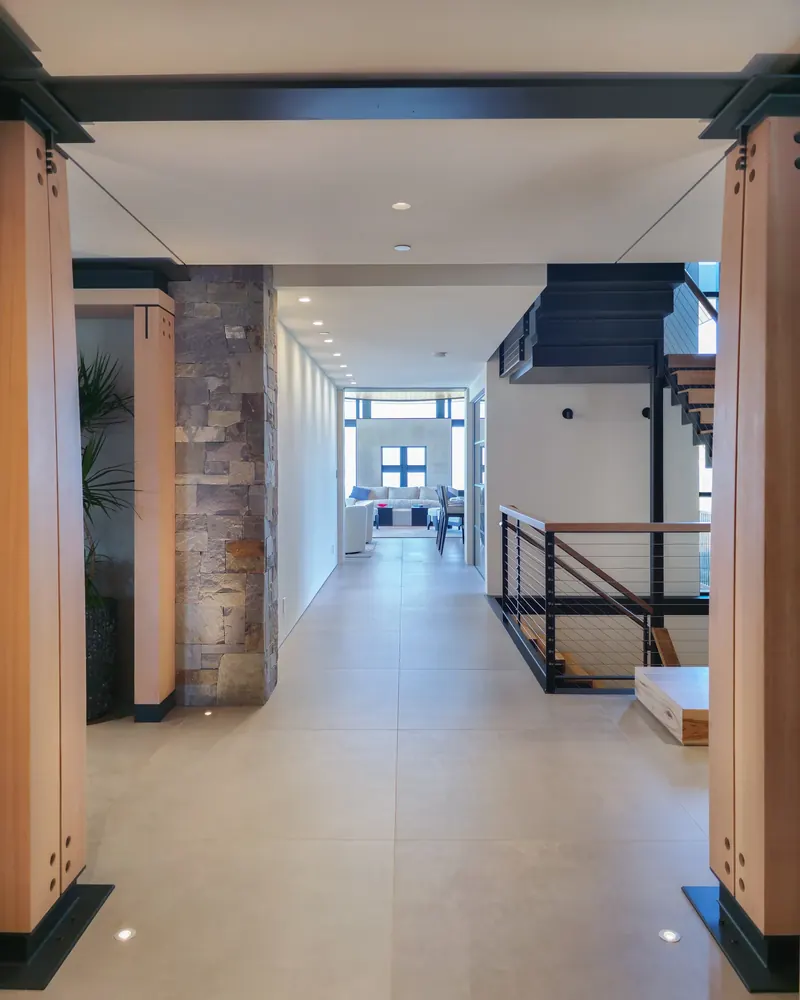
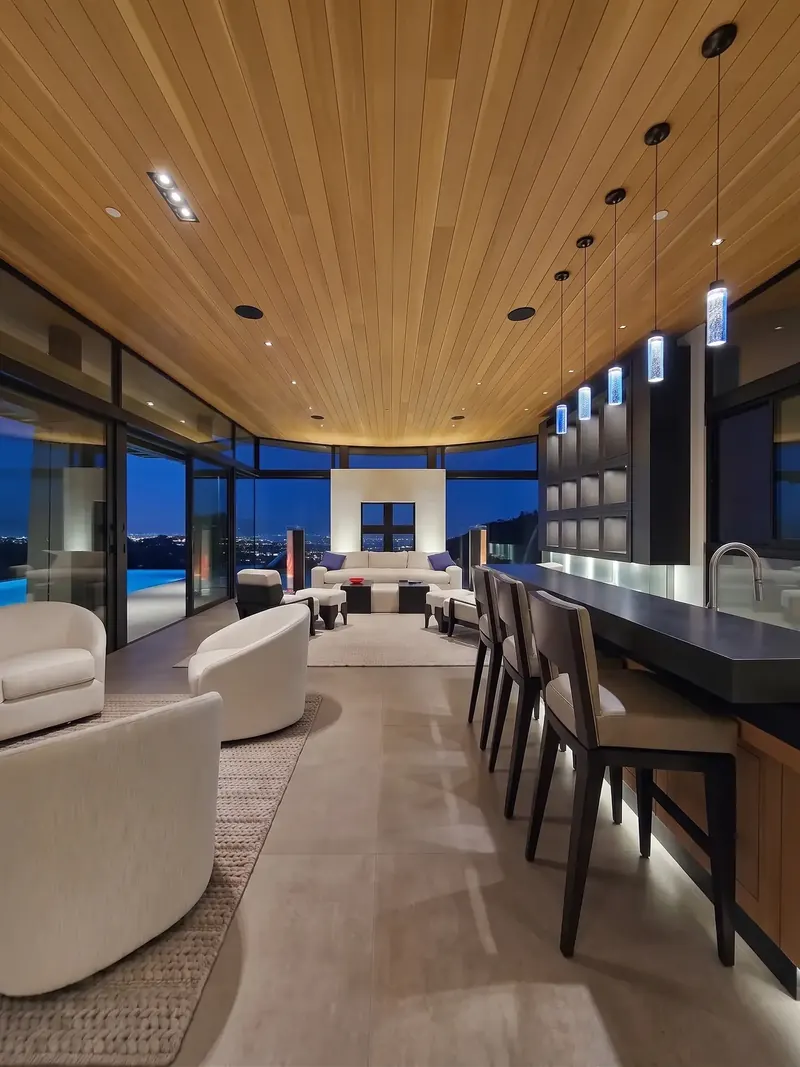
Block undesirable views outside the home
Adjacent houses, street, trash collection areas, etc. This home’s solar array is concealed from view atop flat roof areas that cannot be seen from within the home or from the neighbor’s homes.
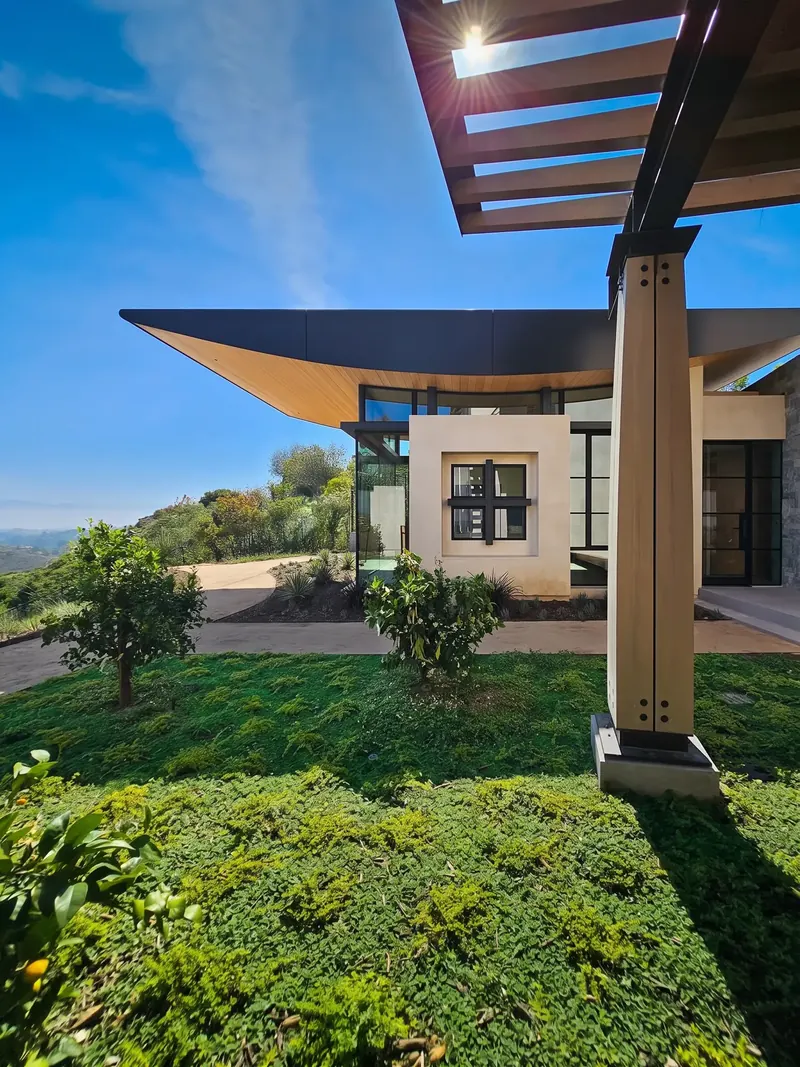
Follow the sun
Window seats placed throughout the home provide a sunny, warm spot at any time (except at night and on cloudy days, of course). Locate rooms to take advantage of the sun.
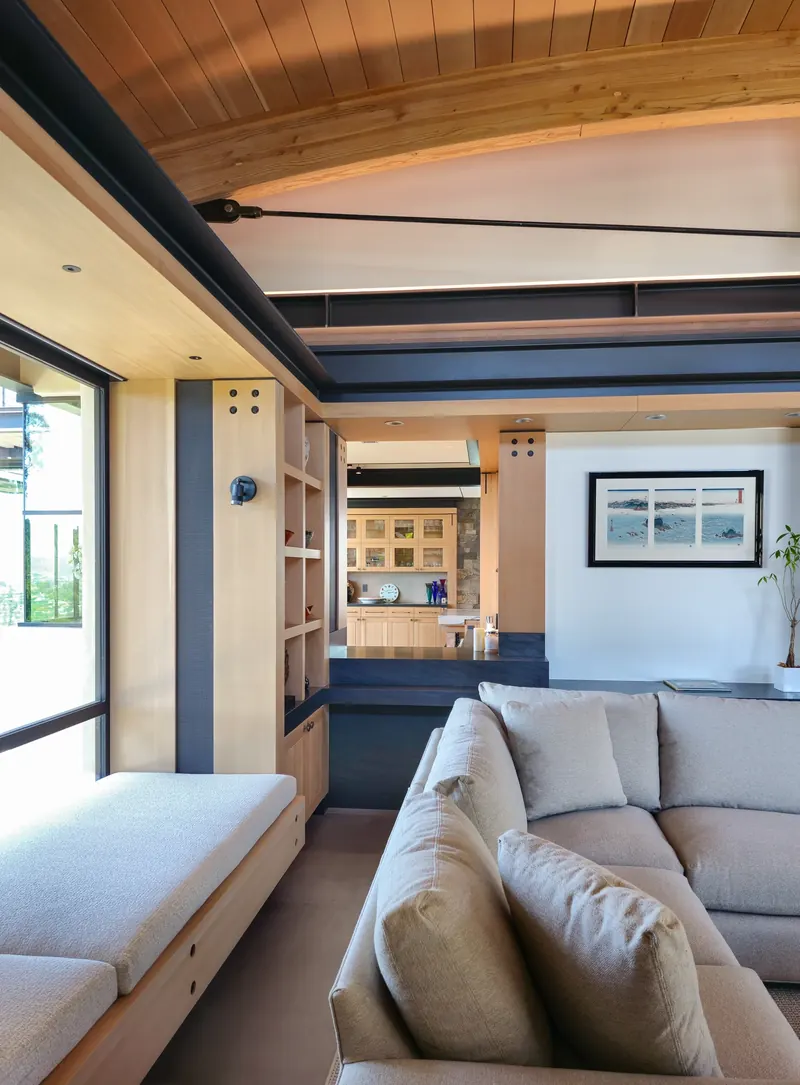
Provide high windows to bring in the sun and natural light where there are no views or unsightly ones.
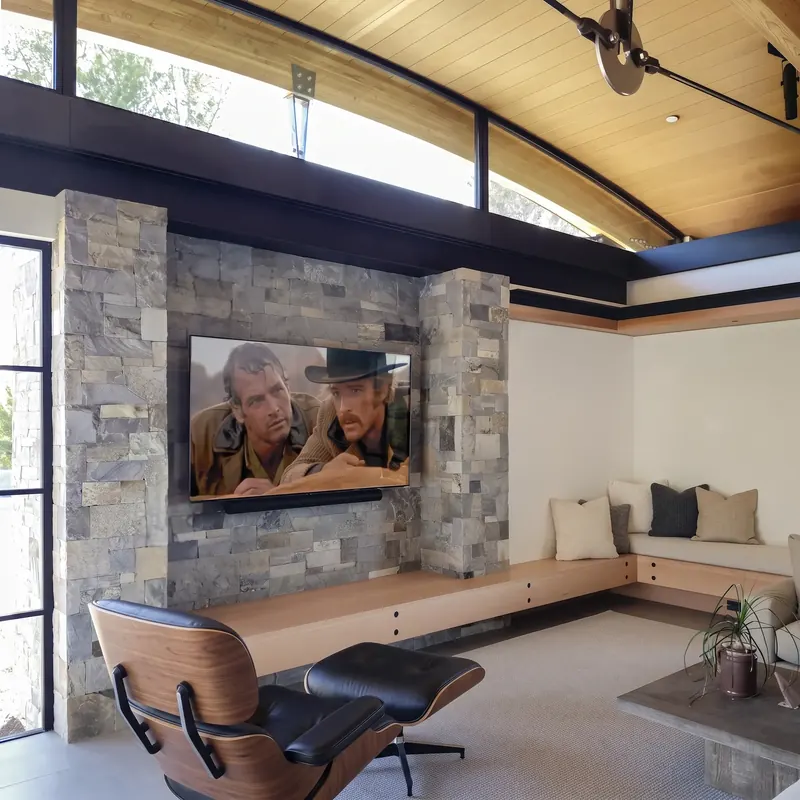
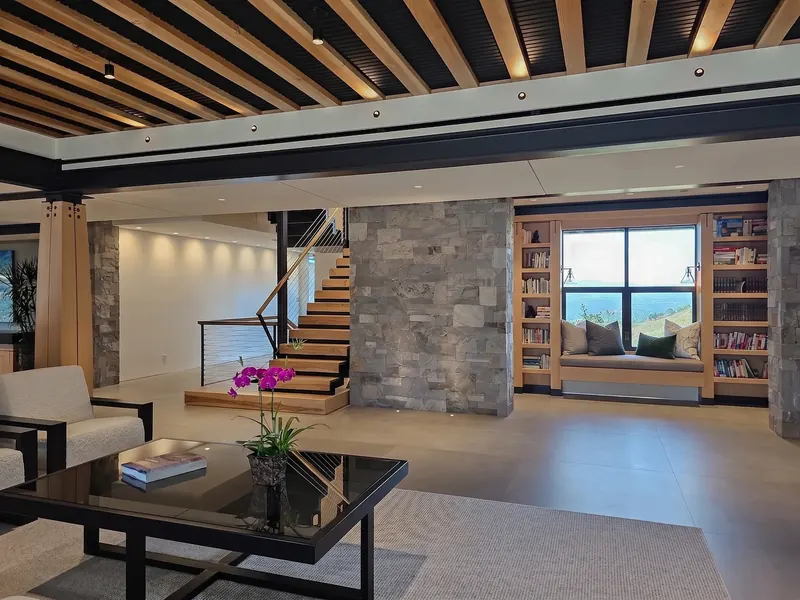
Create a view alcove
A niche in the same vein as a traditional fireplace inglenook, except dedicated to enjoyment of a view.
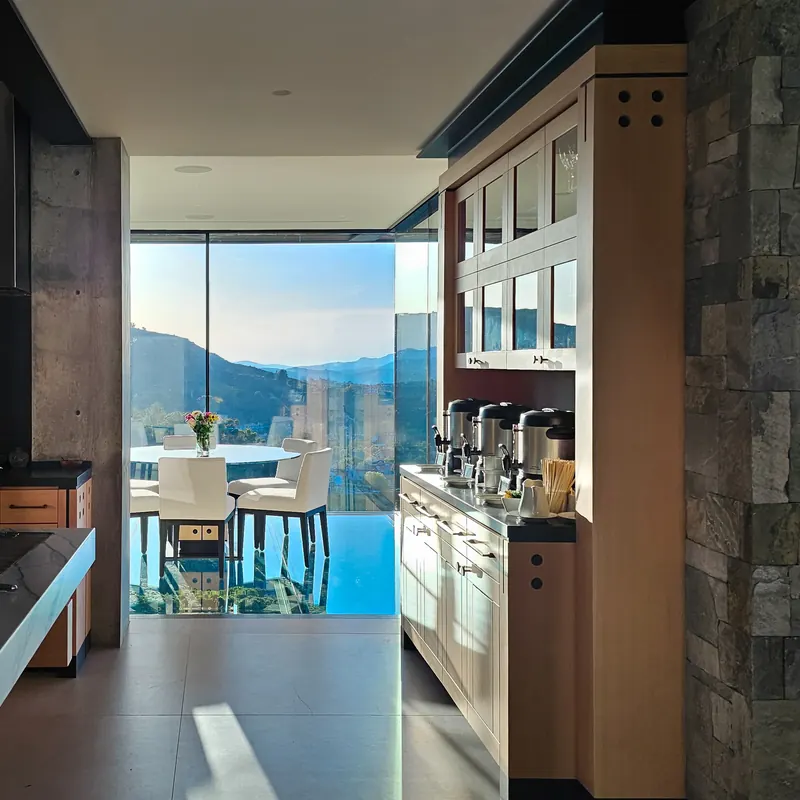
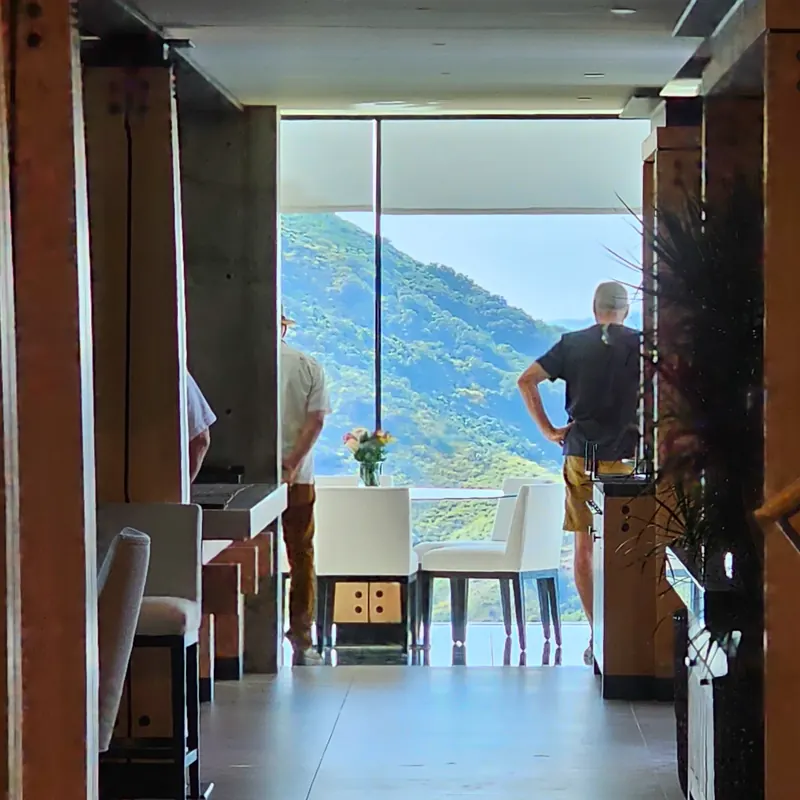
Play tricks with view dilation (field of view)
An interesting optical illusion: objects seen through a window change drastically in size the further the observer is from the window. From far away from the window, objects seen through the window appear magnified. In this home, the mountains seen through the Dinette window (when viewed from the far end of the hallway) appear much larger and closer to the window. From closer, everything appears normal. It is a mostly useless, but fun effect and conversation piece.
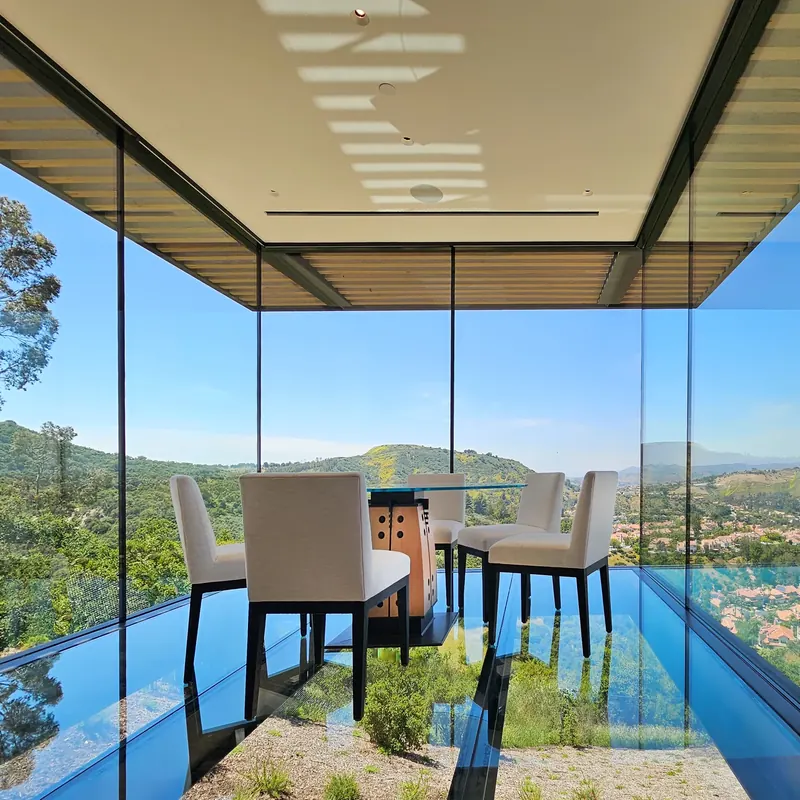
Create multiple locations with distinct ambiance for watching the same view
A view can change dramatically when observed from a different vantage point or when presented differently.
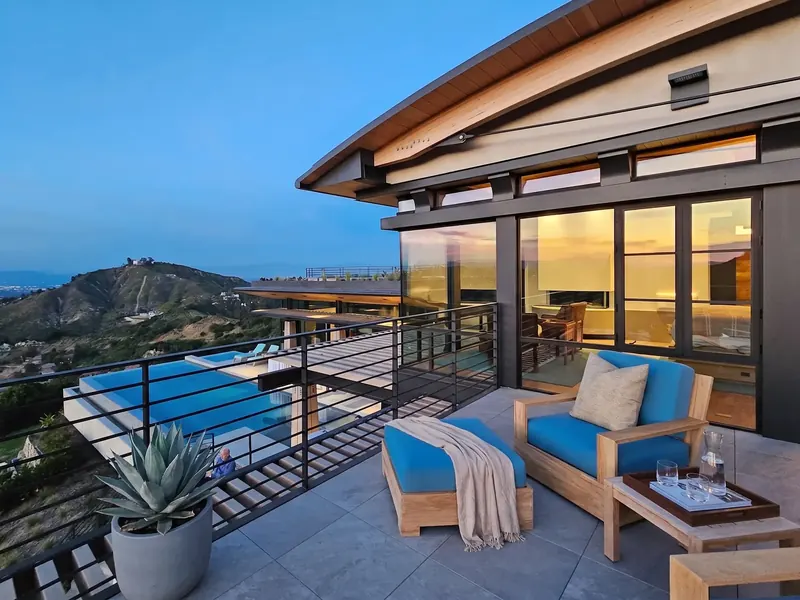
Immerse a room or space in the view
Eliminate as many of the impediments to the view as possible. Make the space feel like it is open to the outside by eliminating walls, window mullions, etc.
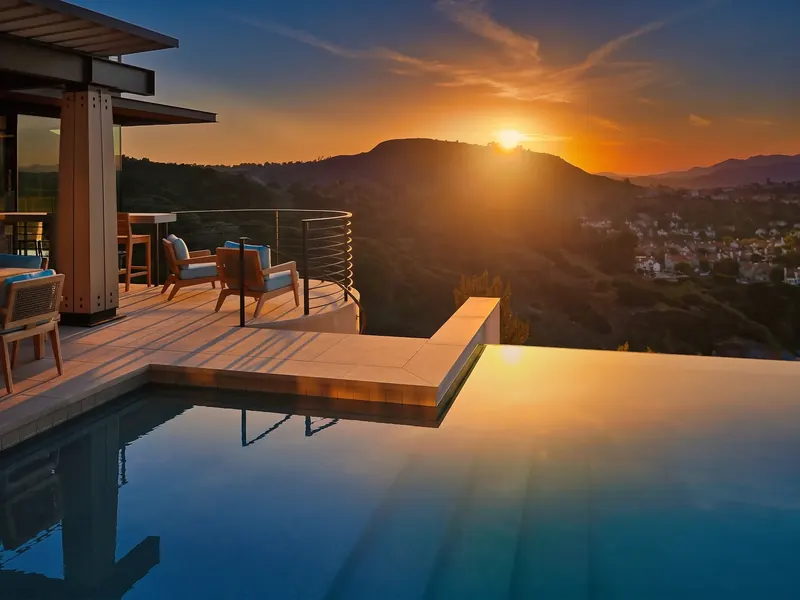
Reflect views
Build pools or reflection ponds in key locations (that act as natural mirrors) to reflect and multiply the view.
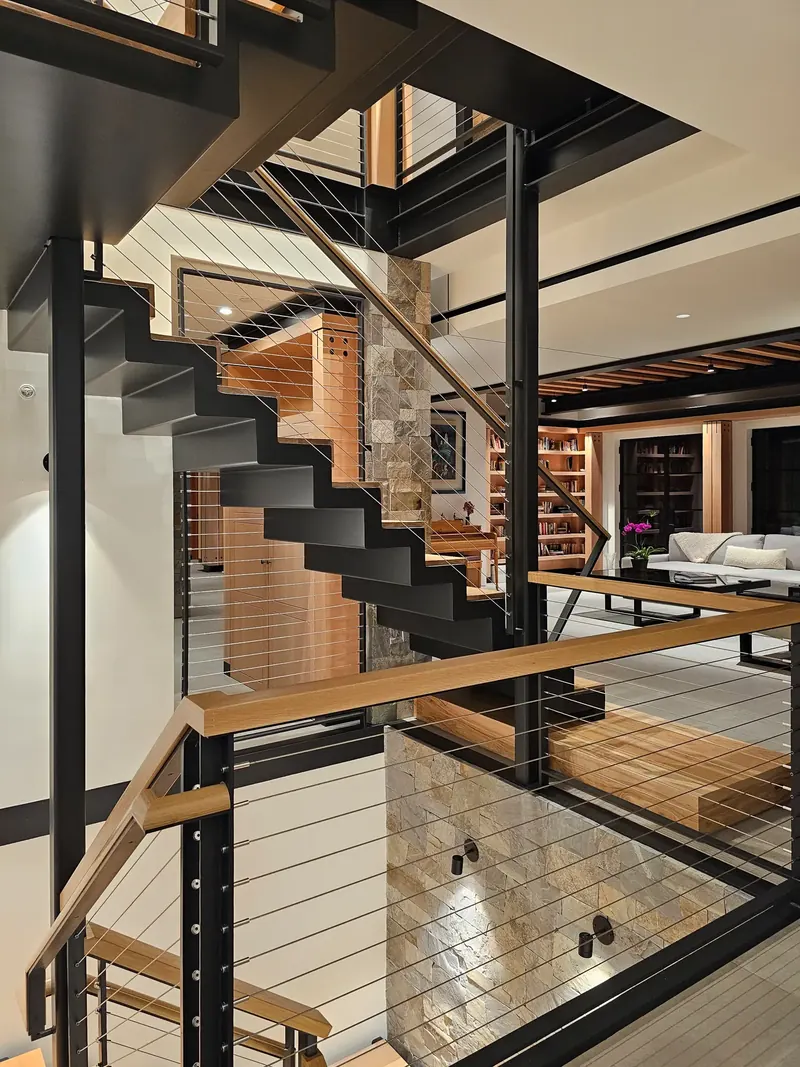
Maintain clear, or less restricted, views with open stairways.
Organize and orient rooms for the appropriate view
Time of day may influence room location and orientation. For example, if watching the sunset from a spa is important, it should have a Western view.
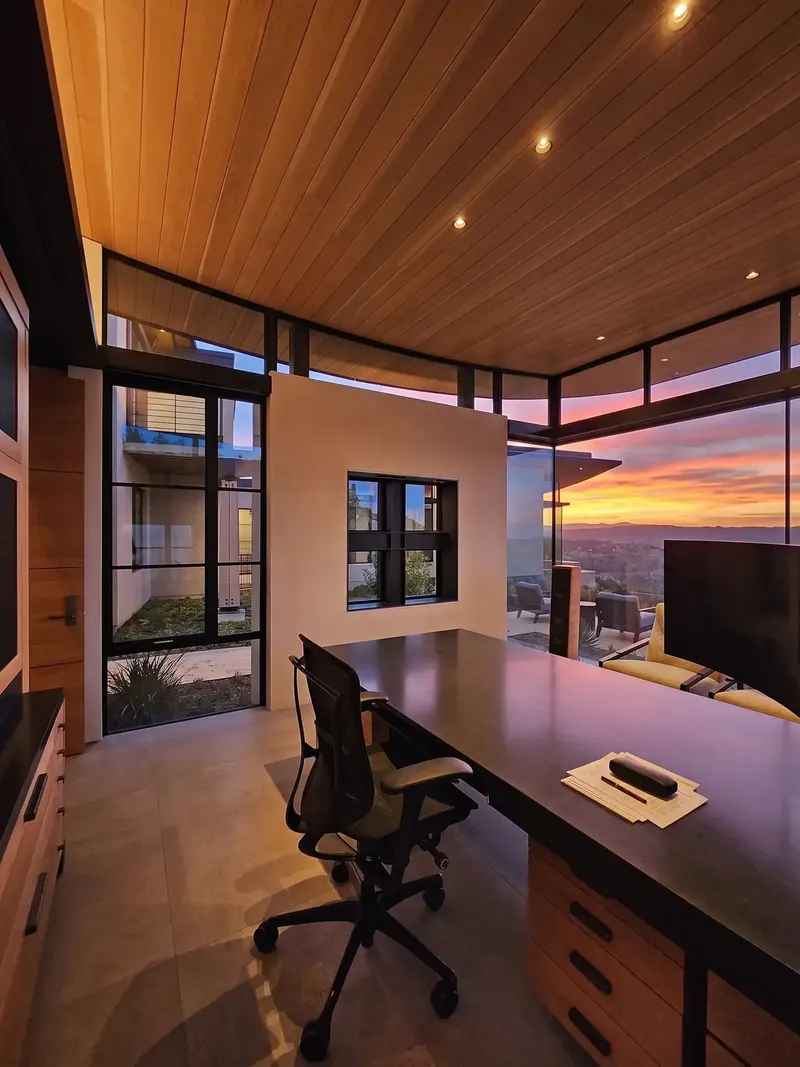
Physically project the home or a room into the view like an outstretched finger.
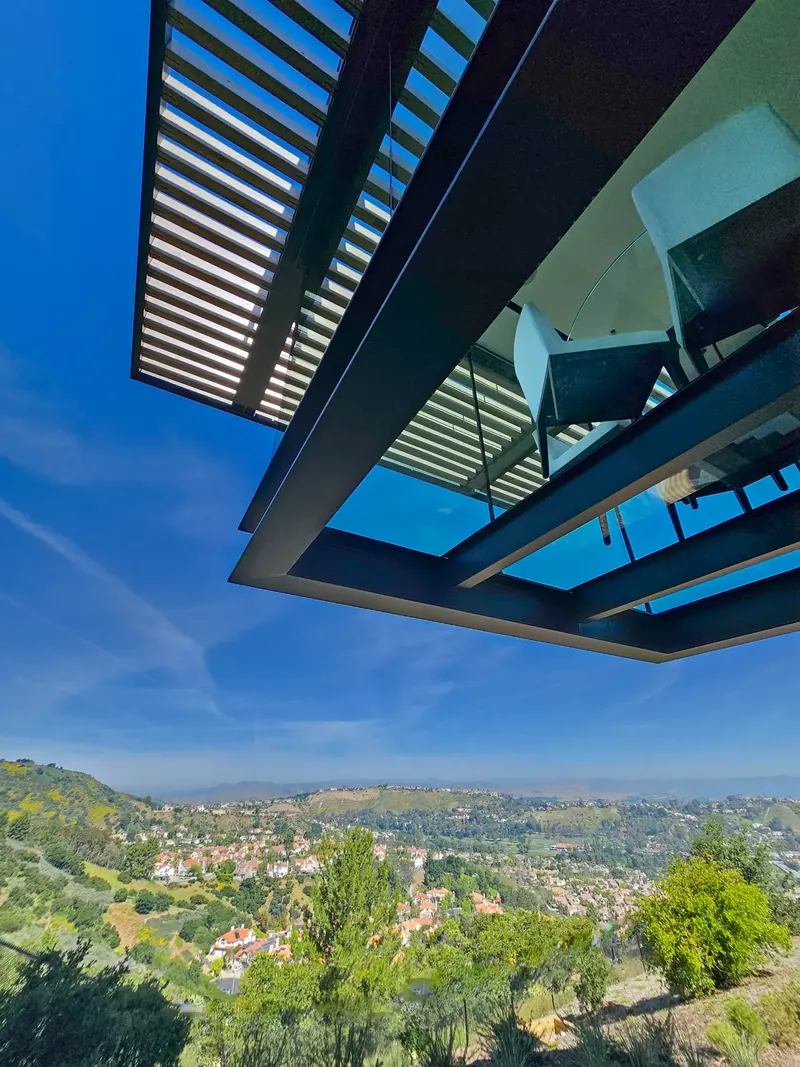
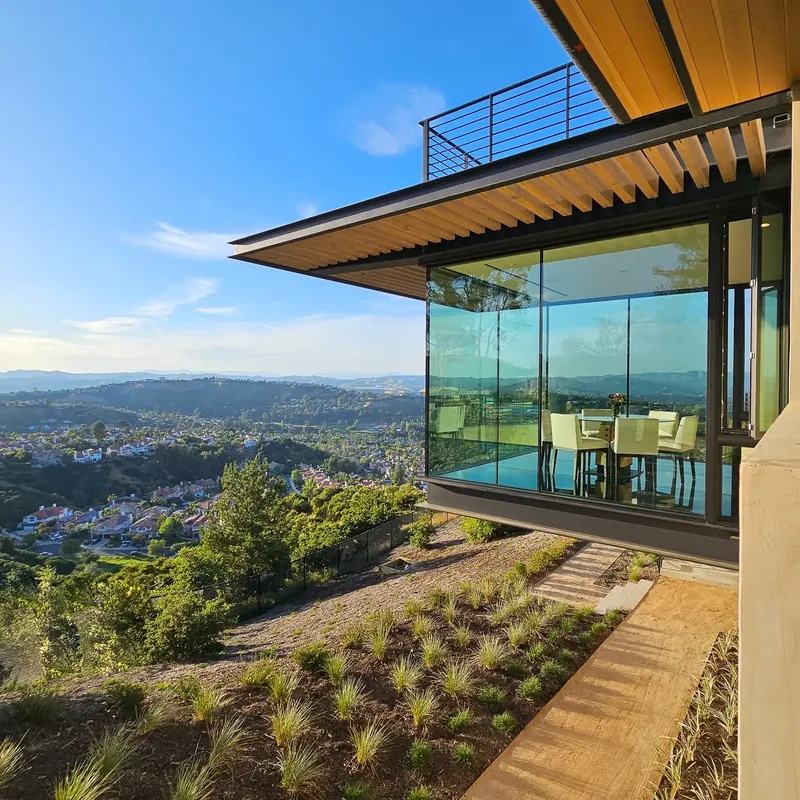
Eliminate a room’s solid corners to psychologically merge the inside and outside together
Corners define rooms.
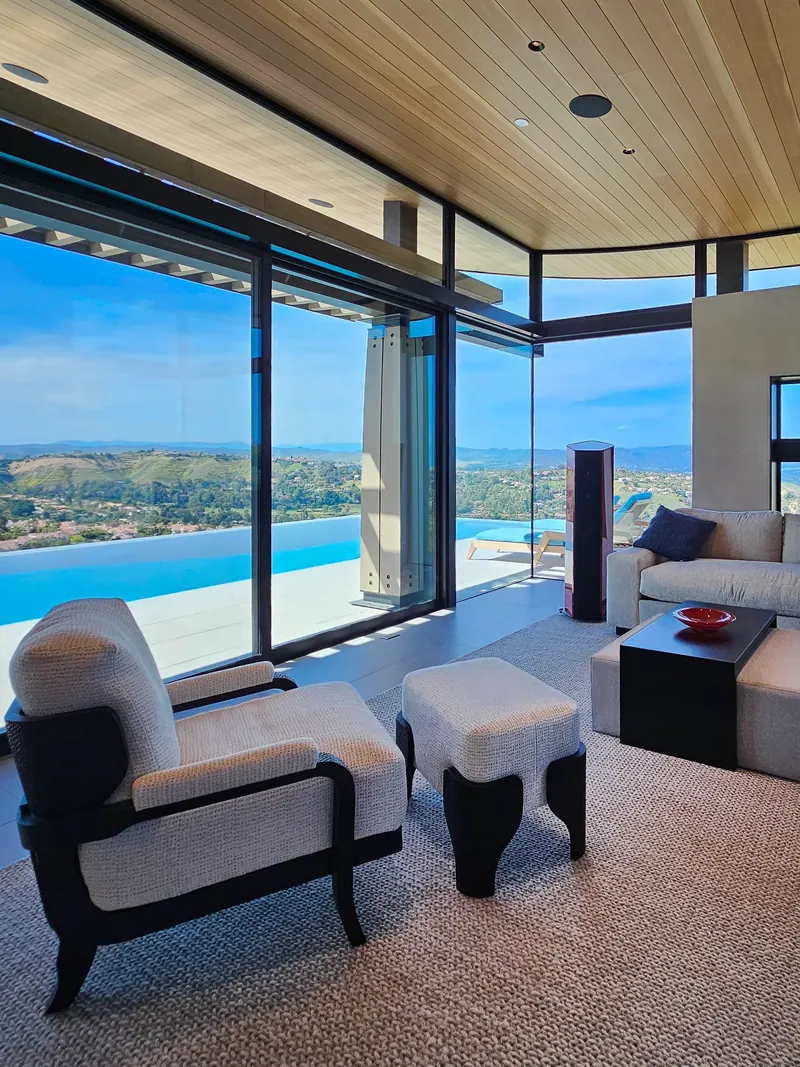
Use floor-to-ceiling windows (or cabinet-to-ceiling or built-in-furniture-to-ceiling, etc.). Filling the gap between solid masses instead of placing a window within the plane of a wall brings in more view.
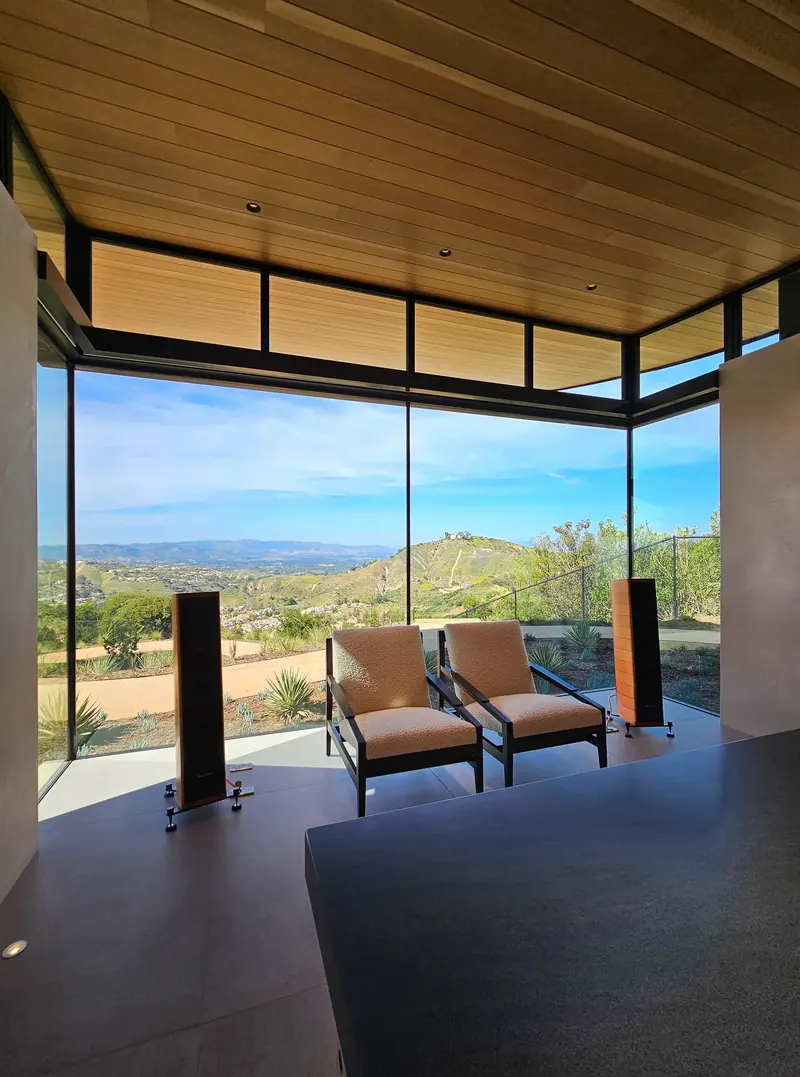
Hide window frames by embedding them, entirely or partially, into the surrounding materials. This visually decreases the separation between inside and outside and draws the view into the home.
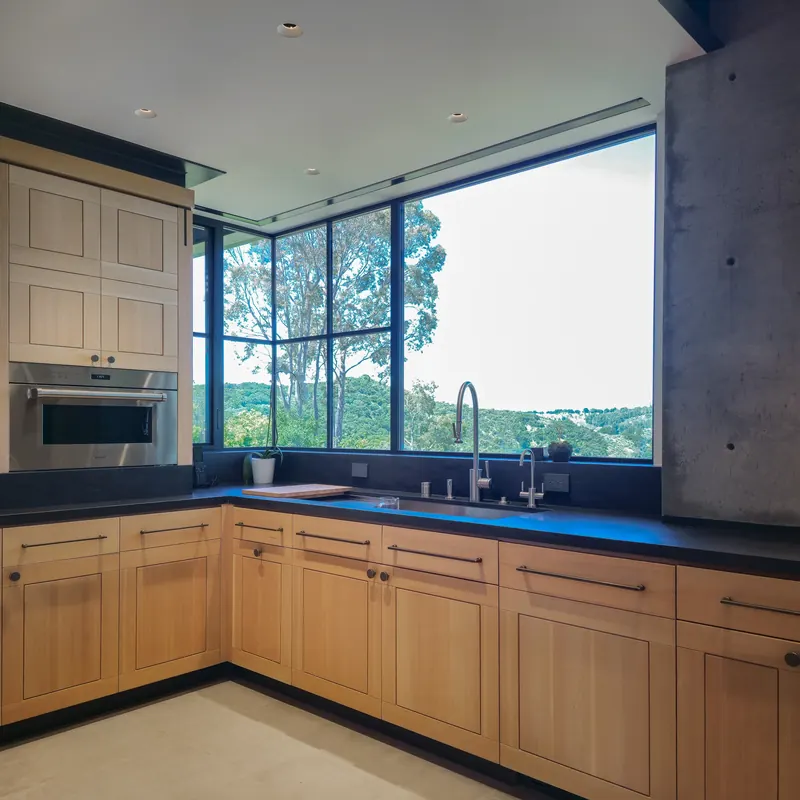
Use crystal clear glass (reduced iron) in windows to avoid the green tint characteristic of standard glass.
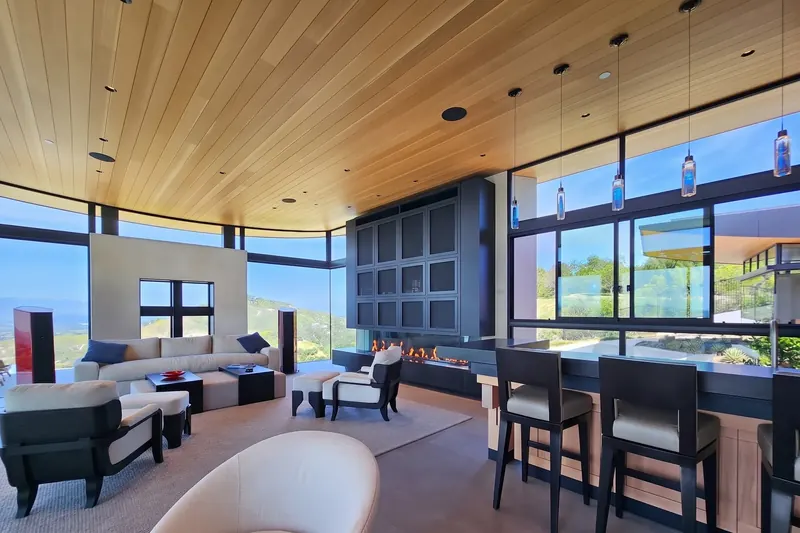
Let indoor materials flow outside, blurring the distinction between inside and outside.
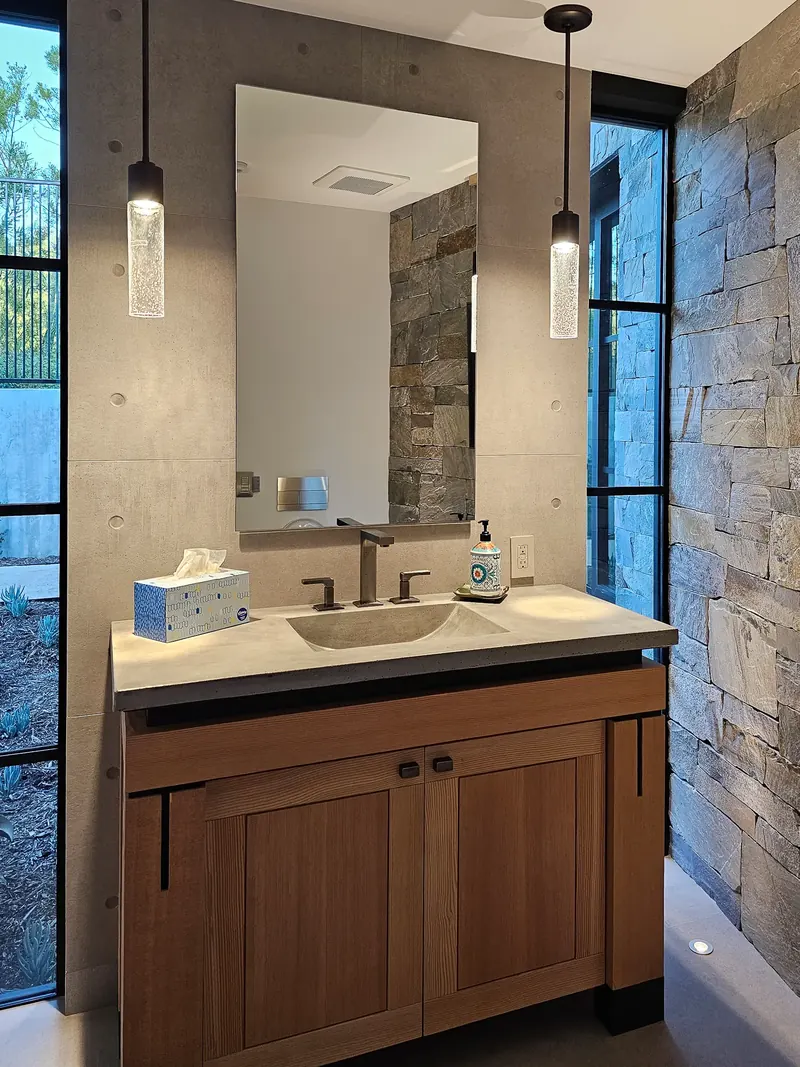
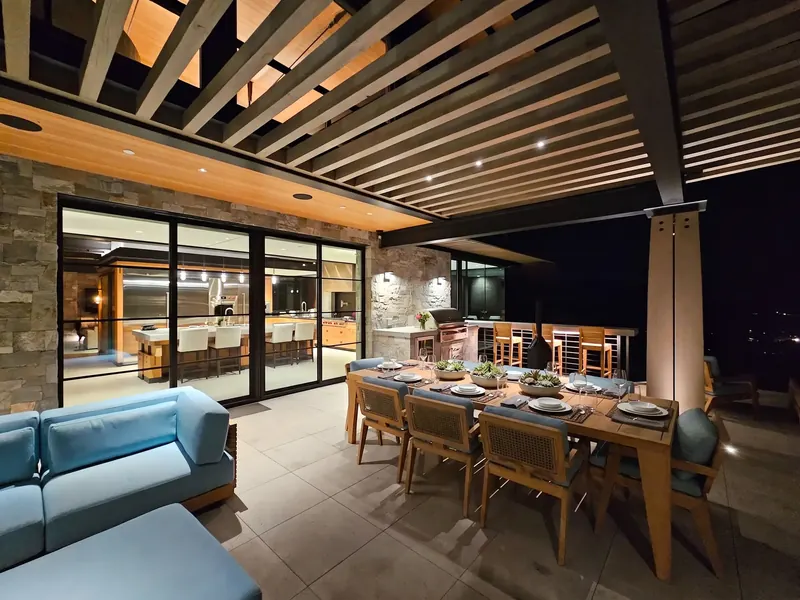
Use glass doors instead of solid doors to the outside, allowing them to double as windows.
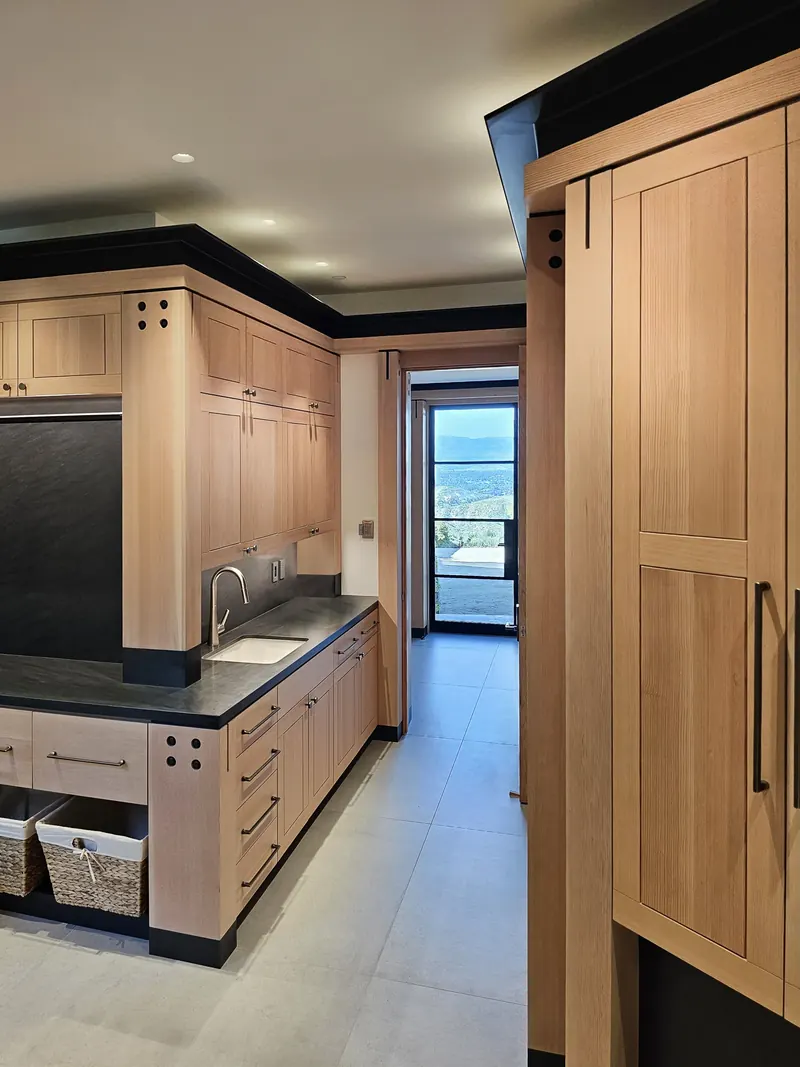
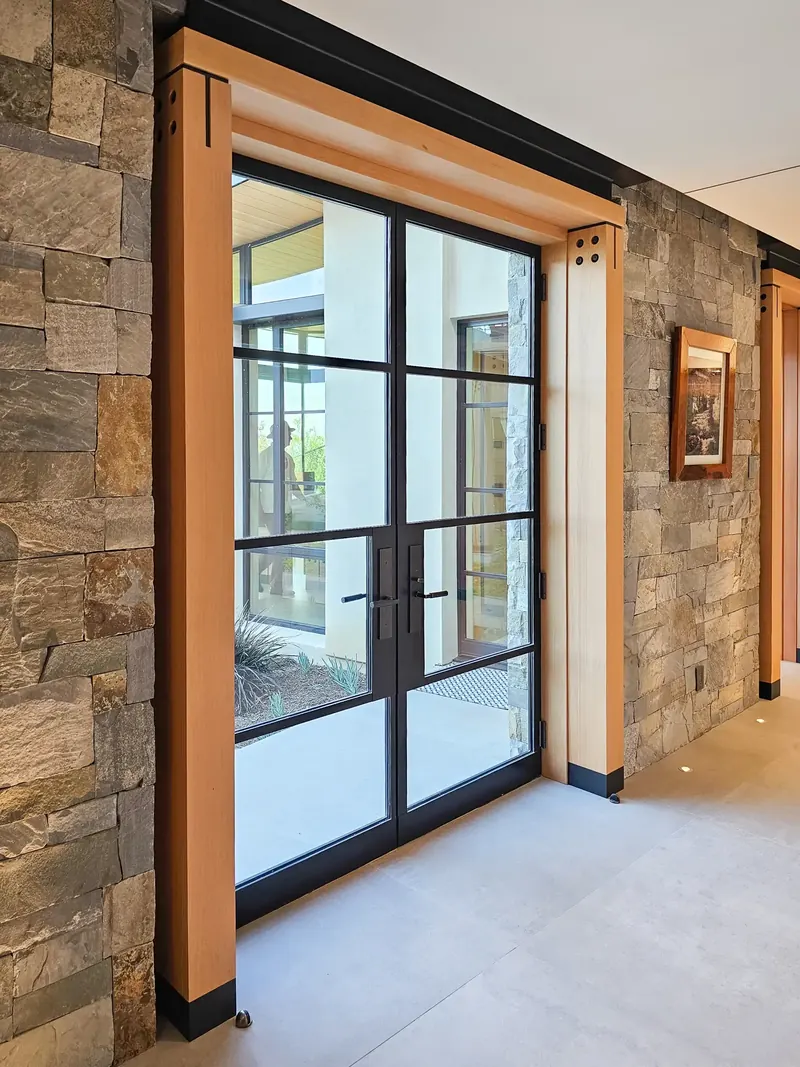
Capture overlooked views
The night sky is often overlooked but may be captured by a roof deck or skylight.
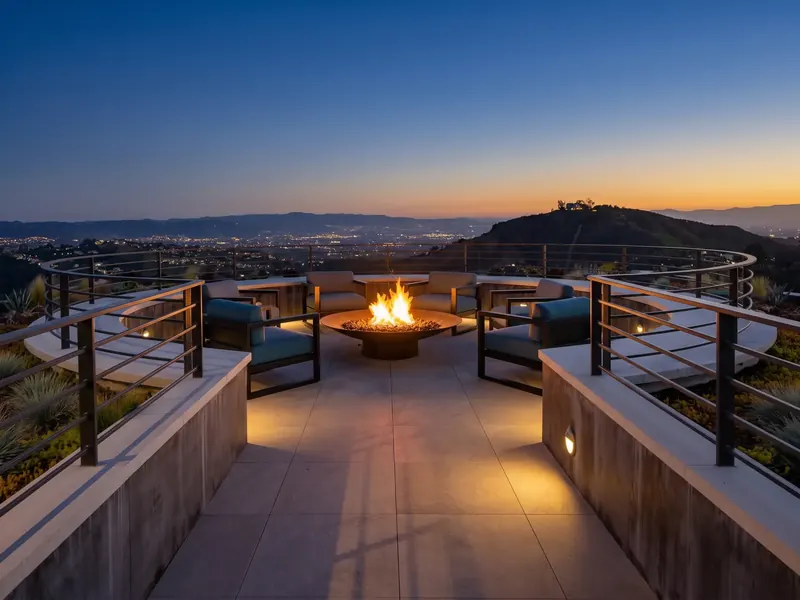
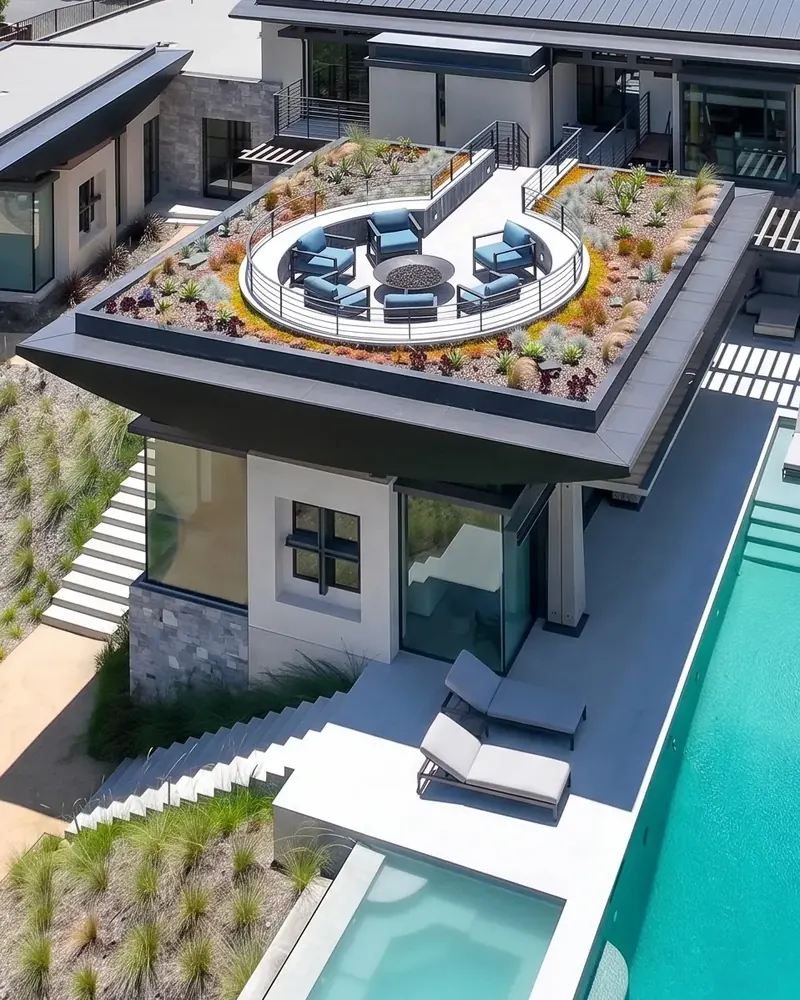
Create flexible viewing locations with furniture arrangements that accommodate fine-tuning of the view. Sometimes it’s as simple as installing a swivel chair.
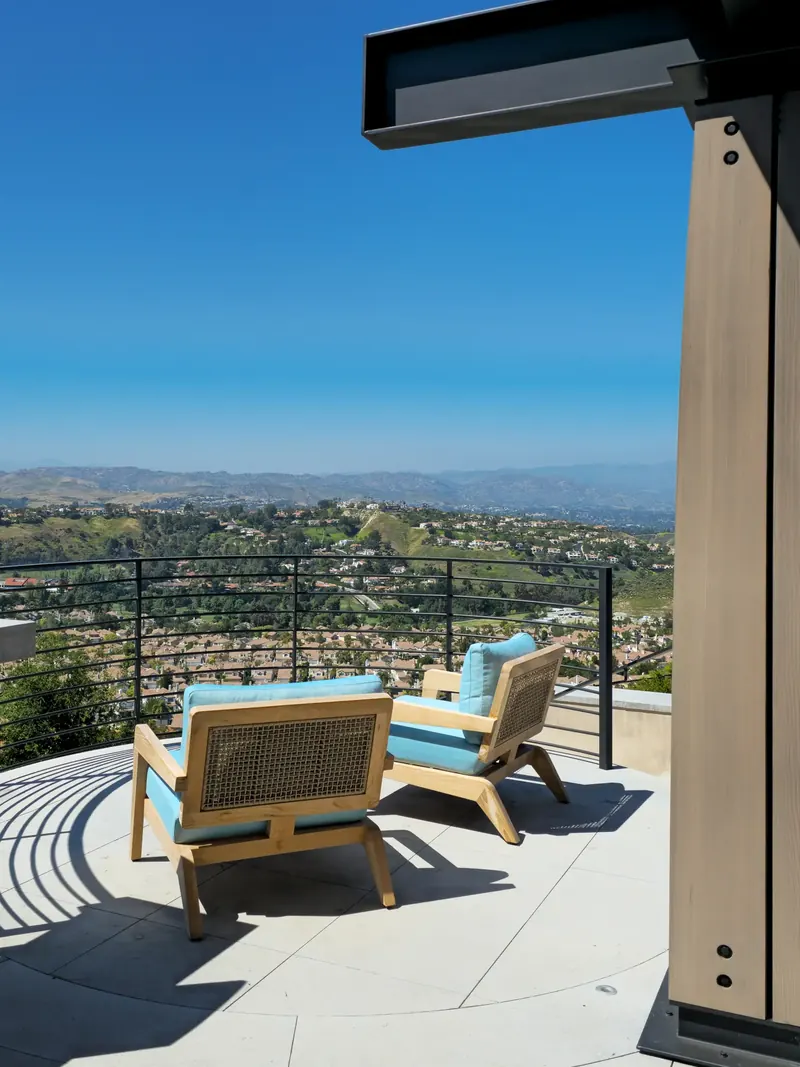
Avoid distracting interior furnishings
Simple, low-key furniture with neutral fabrics focus attention outwards.
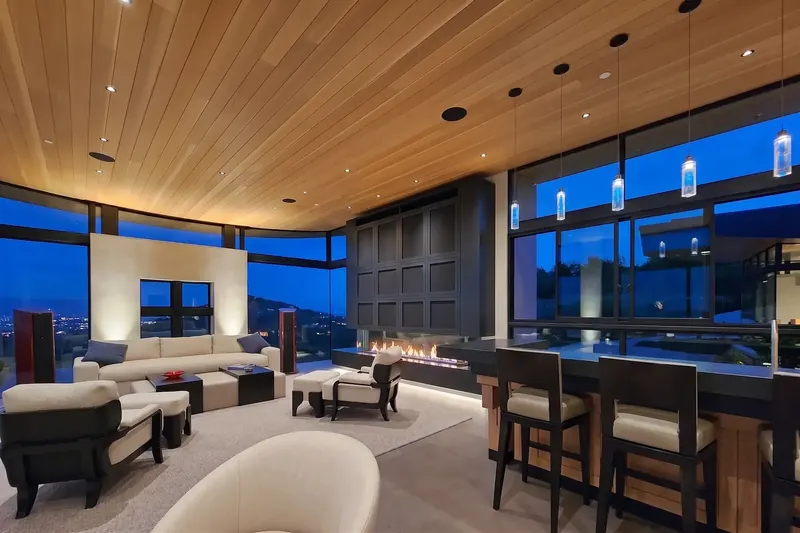
Enhance ease of viewing
Providing sun control (overhangs, trellises, etc.) above windows makes viewing more comfortable.
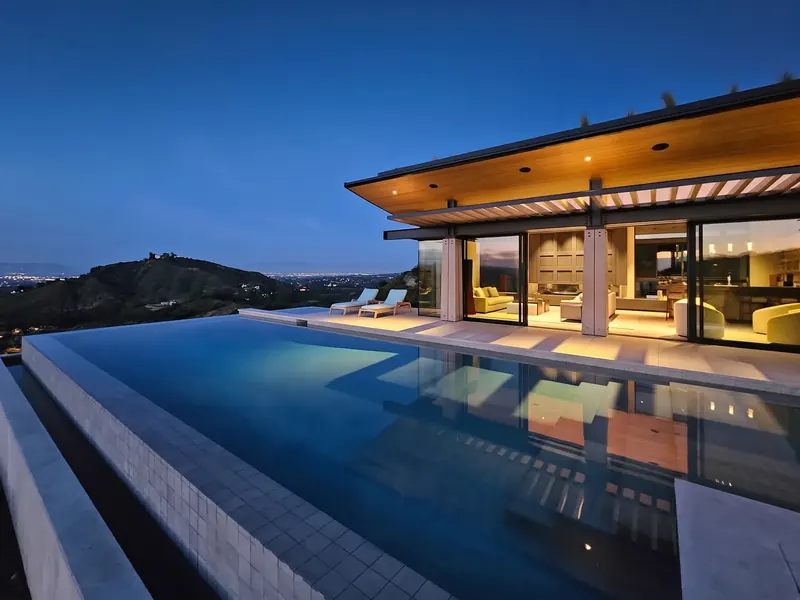
Shield the view
Provide deep overhangs to limit rain spots on windows
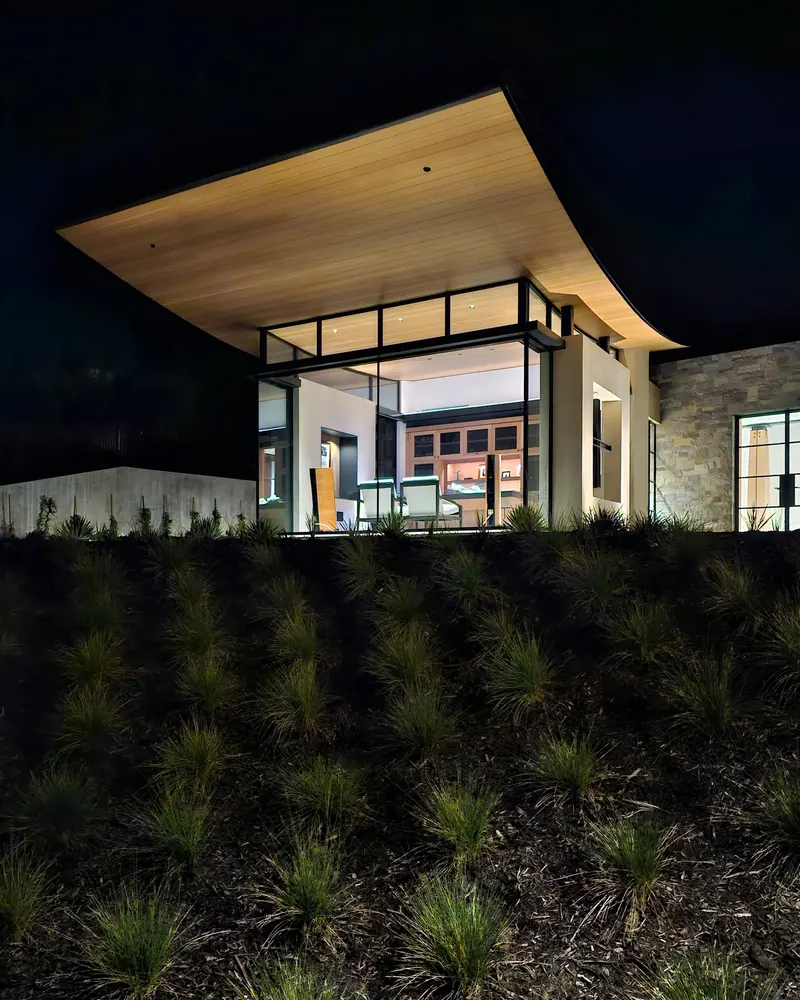
Layer views
A wide-open view is not always as desirable as one framed or layered by short and intermediate elements of landscaping or physical constructions.
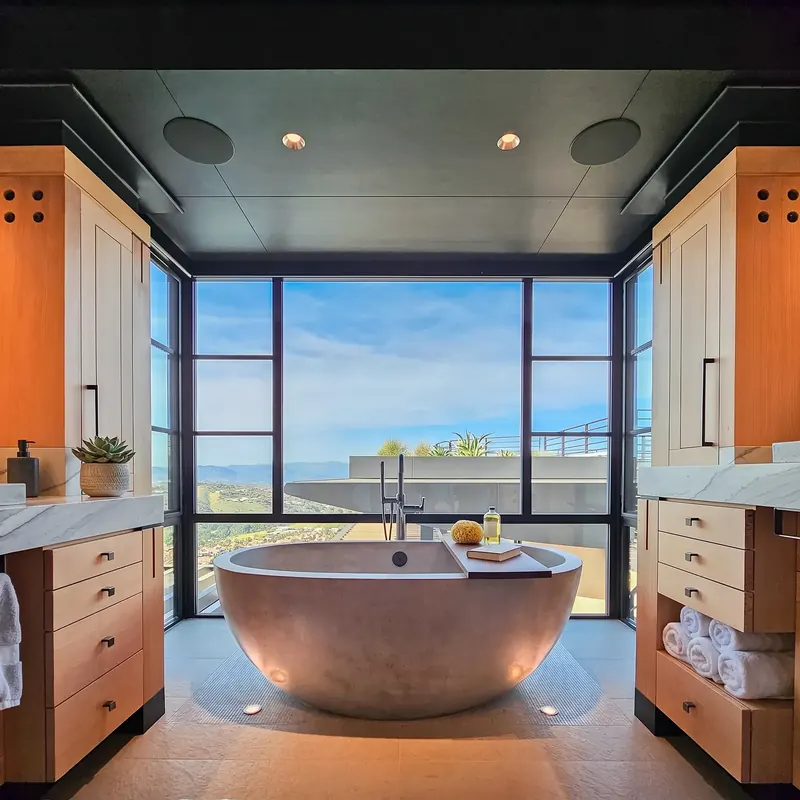
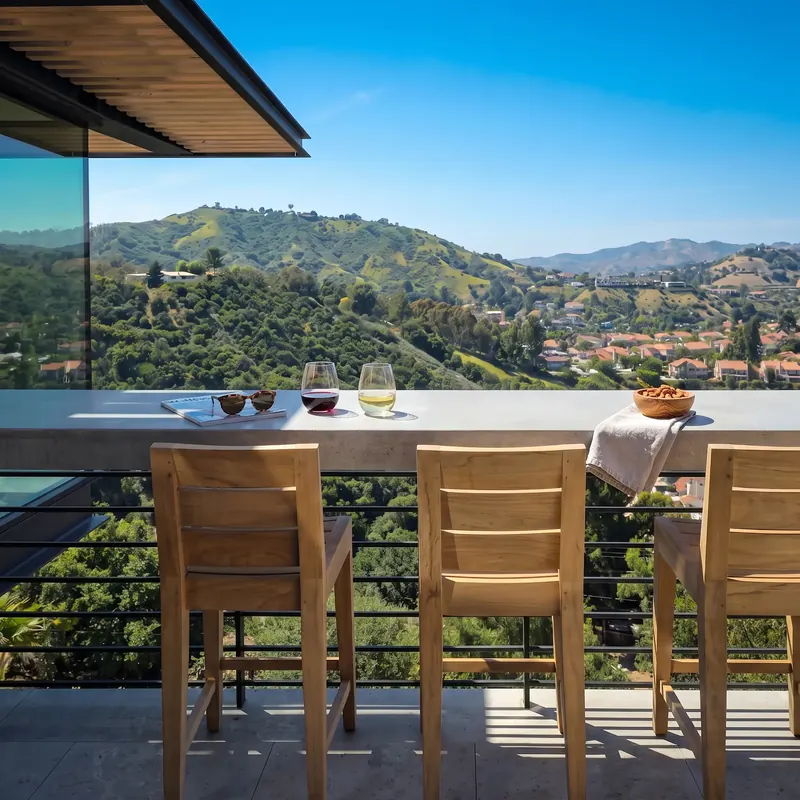
Create dedicated places to enjoy the view
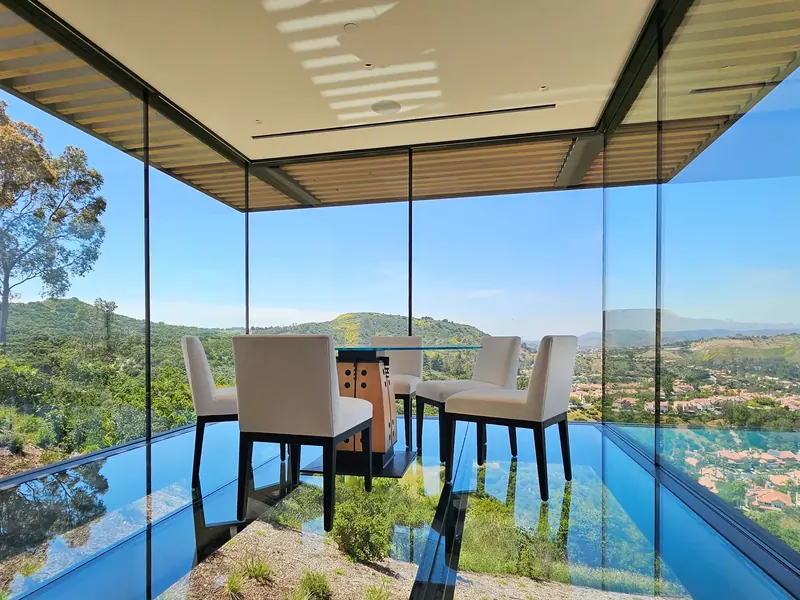
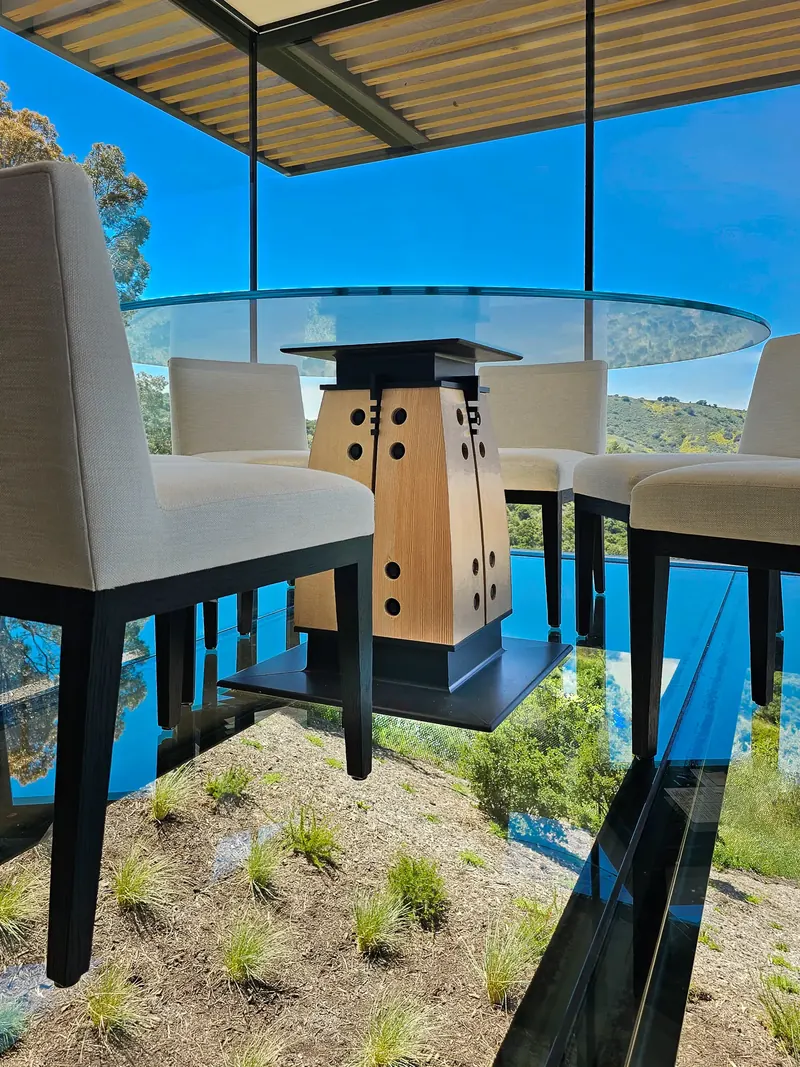
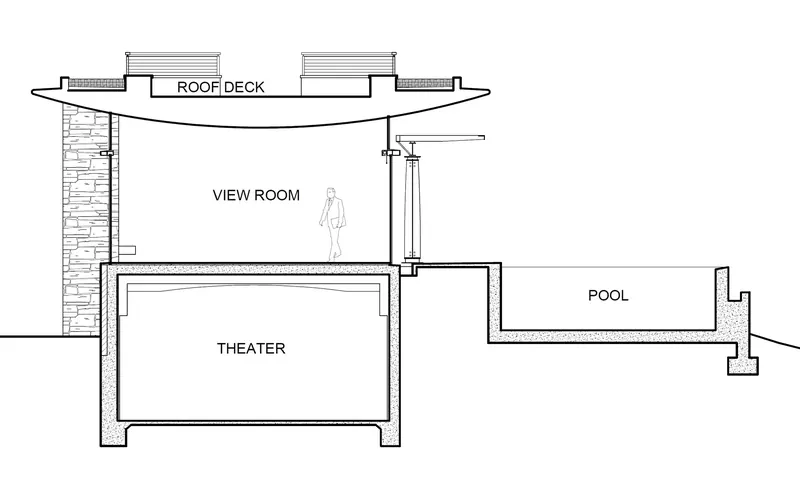
Down can also be a view
Create a glass floor view
Provide relief from the view
Audiophiles experience ear fatigue after listening for extended periods of time. The music loses its impact and doesn’t provide the same joy. Too much view without respite has the same consequences. Provide alternative spaces with different views, or no views at all, in which to recharge.
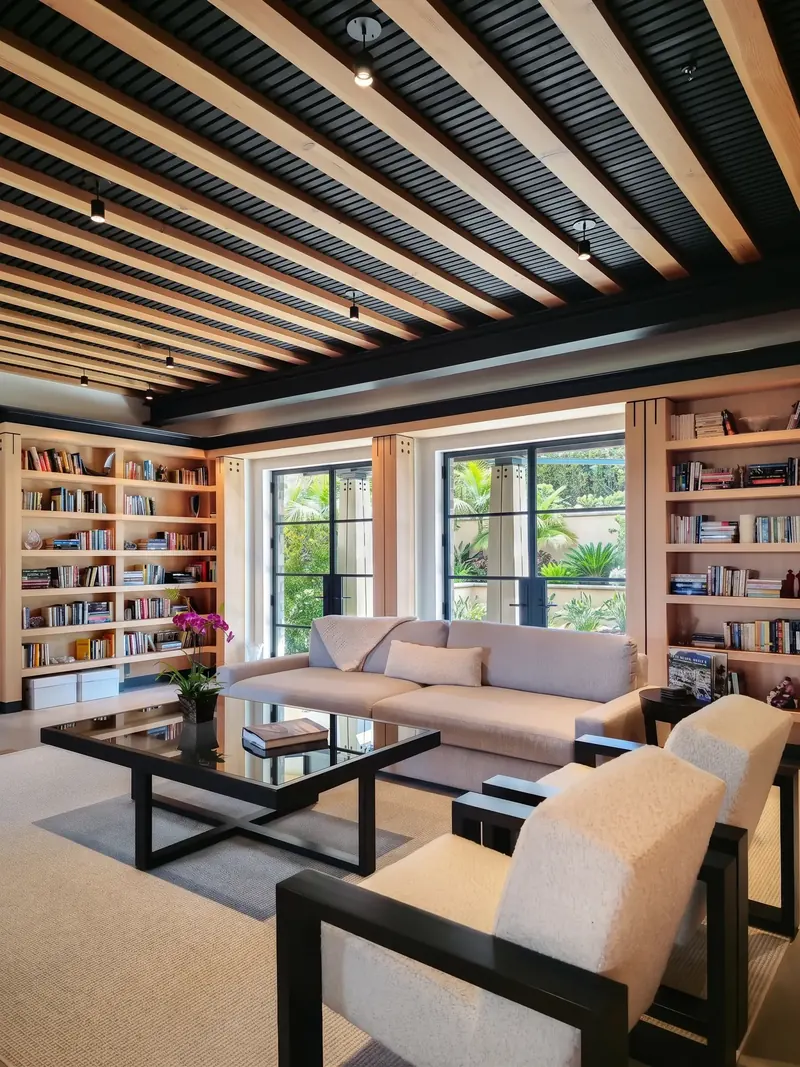
Provide a mixture of close, intermediate, and long views
Variety is the spice of life, after all. While a sweeping, long view tends to be more dramatic and sought after, shorter views are often serene and comfortable.
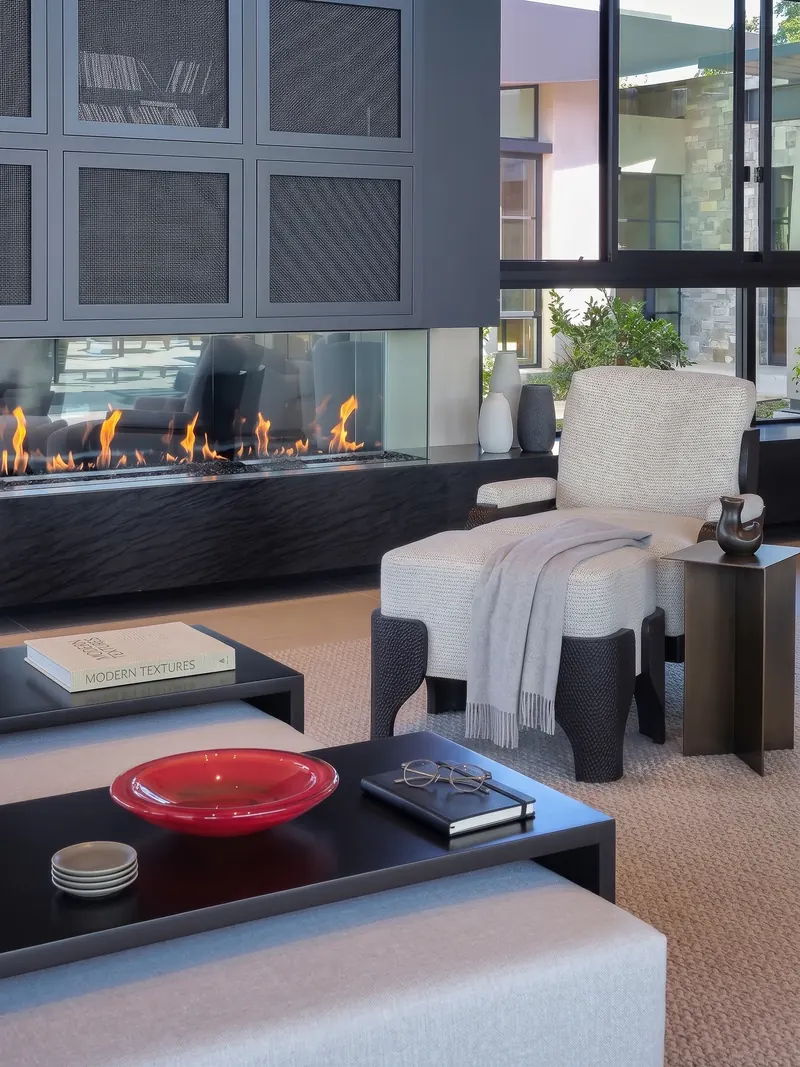
Draw in the view with splayed walls or ceilings
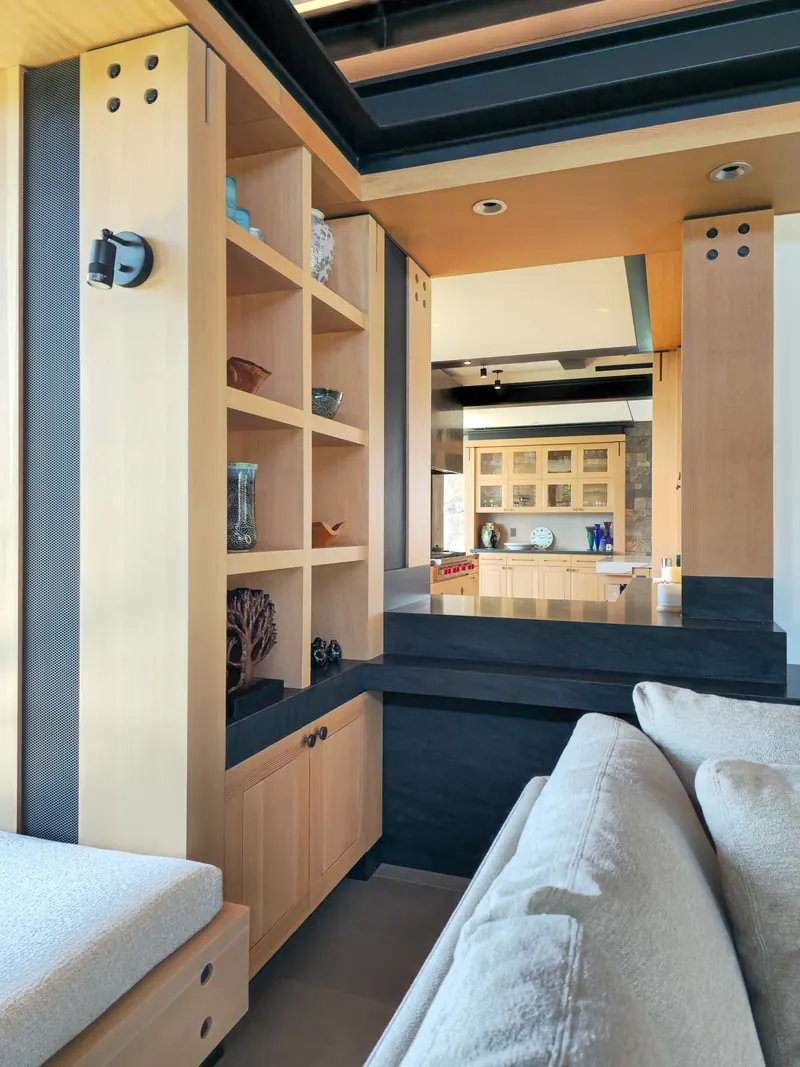
Views within a home are as important as those looking outwards, especially at night when most outside views disappear. Create peek-a-boo views between rooms as a means of family communication and connectedness, but also for aesthetic interest.
Planning strategies
All of the following strategies refer to the floor plans of the house.
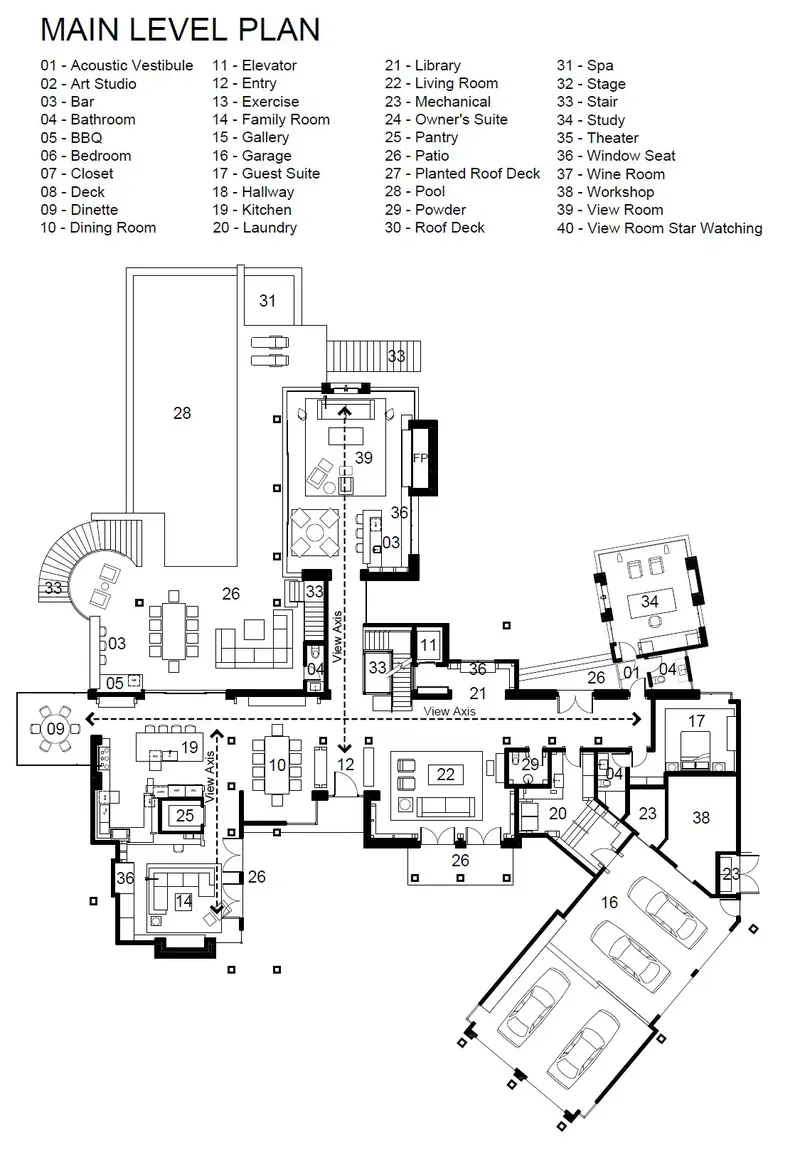
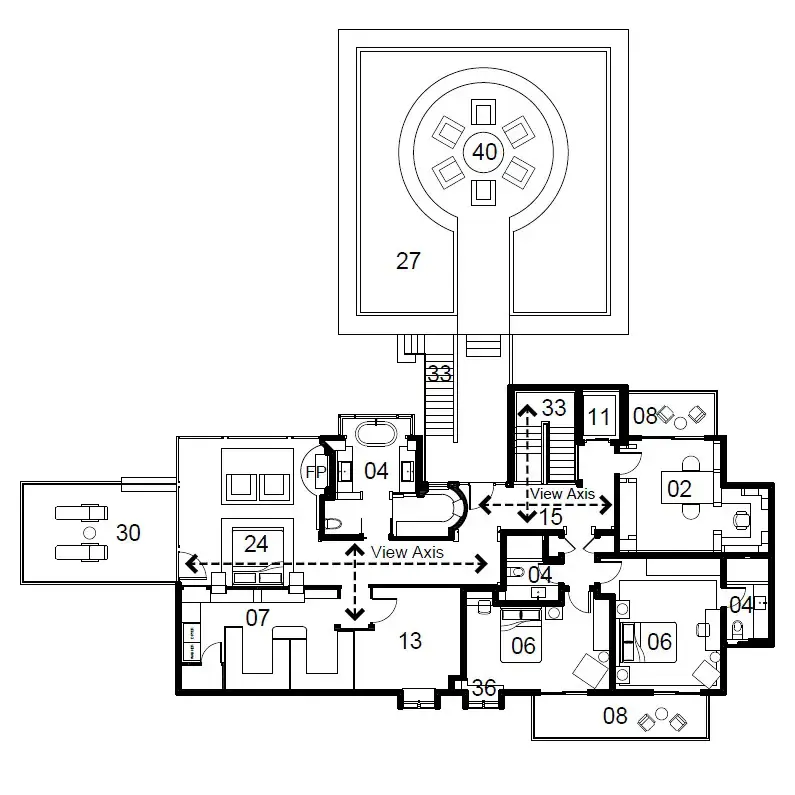
Order rooms and place them into the plan based on importance of view
Seldom, obviously, does a garage need a prime view location.
Create views where there are none by building courtyards, modifying terrain, installing landscape elements, features, etc.
Share the view
Homes with open floor plans maximize available views
Encourage the flow of people out of the home and into the view with easy access between inside and outside. Make decks and patios plentiful and easily accessible.
Increase window potential
Create a floor plan with more perimeter available for windows (in the form of wings or fingers).
Create view axes
When moving from one area of the home to another, the focus ahead while walking should be a desirable view, to either the exterior or interior.
The converse to creating view axes
Position rooms and doors to avoid undesirable view axes. Never, for example, place the door to a bathroom at the end of a hallway (unless you really adore your toilet).
Design the private spaces of a home in a way that blocks the direct view into the room from outside the bedroom so there is visual privacy even when the door is open. At a minimum, for bedrooms, this means never allowing the bed to be visible from the corridor. We often create vestibule-like situations for even greater privacy.
Bringing it home
A great view is a gift of the site, but it takes design to make it part of everyday life. None of these strategies works alone: together they decide where rooms sit, how they open, what they frame and what they hold back.
If your site has a view worth celebrating, we would love to talk about how to bring it home. Start a conversation.