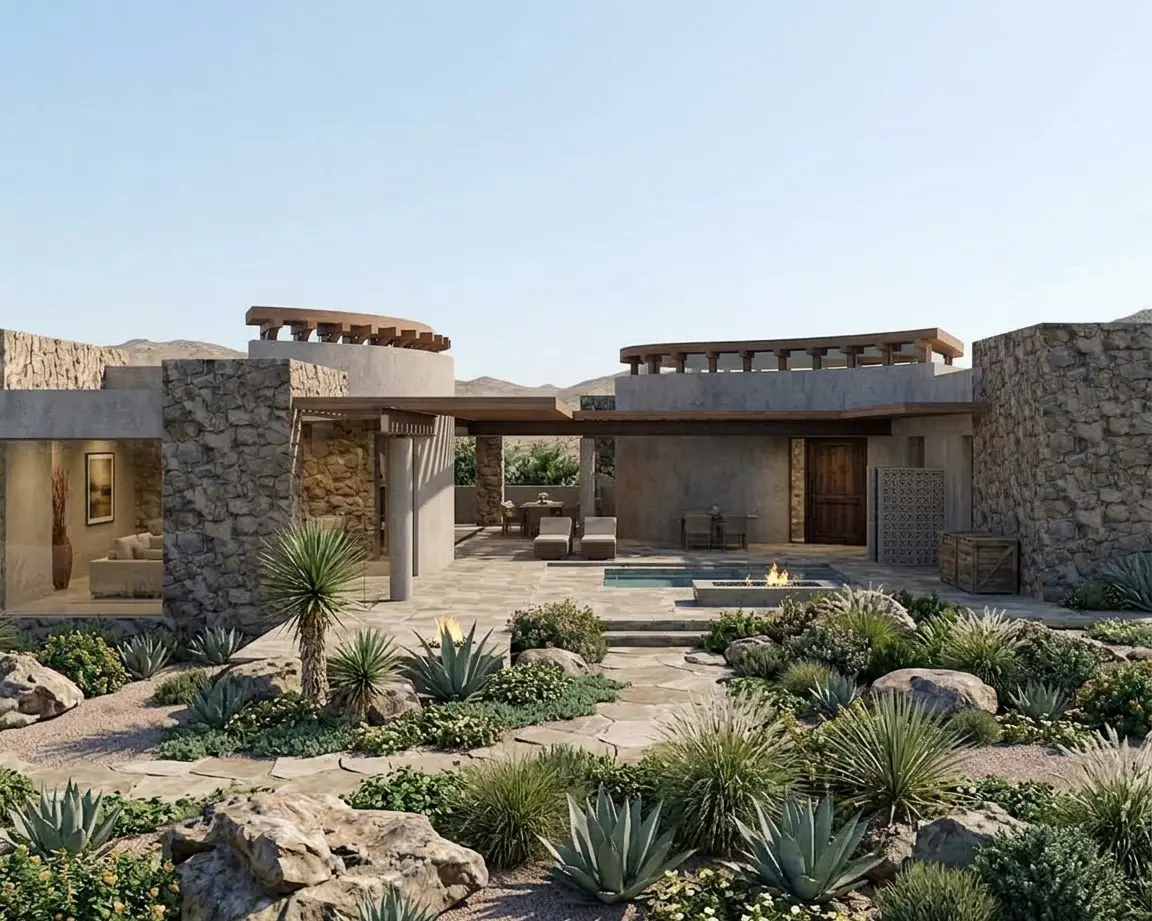
The desert offers extraordinary light, wide horizons, and a strong sense of place. It also brings intense sun, large temperature swings, scarce water, and sudden storms. The best desert homes work with these conditions: they stay comfortable with less energy, frame the landscape, and feel at home among rock, sky, and plants.
Let the sun and heat shape the design
Climate is the starting point in the desert. Smart design reduces the need for mechanical cooling.
- Orientation. Position the house to limit hot western and southern sun on glass, and to capture views and cooler light from other directions.
- Shade. Deep overhangs, covered terraces, pergolas, screens, and courtyards cast shadow where it is needed. In the desert, shade is as valuable as view.
- Thermal mass. Thick walls of concrete, rammed earth, adobe, or masonry absorb heat during the day and release it at night, smoothing the large temperature swings typical of arid climates.
- High-performance glazing. Low-E, insulated glass lets you enjoy the views without letting the heat in.
- Reflective, light-colored surfaces on roofs and walls reduce heat gain.
- Night cooling. Many deserts cool quickly after sundown. Operable windows, clerestories, and courtyards can flush heat from the house.
These strategies, known as passive design, lower energy use and make rooms comfortable, which matters in a place where summer air conditioning costs can be significant.
Courtyards and outdoor rooms
Desert living is outdoor living, especially in the mornings and evenings. Courtyards, shaded patios, and covered terraces extend the house, and a pool or fountain can cool the air and add a sense of calm. Outdoor kitchens, fire features, and shaded seating make these spaces usable through much of the year. Our Desert Lantern House in Arizona shows how glowing, open interiors and carefully framed outdoor spaces can bring light and landscape together.
Frame the views and bring the landscape in
Desert views are often wide and low, with distant mountains and big skies. Large windows, corner glass, and carefully placed openings frame the best of them, while shade devices manage the glare. Preserving native plants and rock formations around the home keeps it anchored to the site, and drought-tolerant landscaping reduces water use and maintenance.
Know the site risks
- Washes and flash floods. Dry desert channels can fill suddenly during storms. Siting the house above the wash, with proper drainage, is essential.
- Soils. Some desert soils are expansive or collapsible and need engineered foundations.
- Rock. Hard caliche or bedrock can increase excavation costs.
- Wildfire. In some desert and foothill communities, brush fires are a risk. Fire-resistant materials and defensible space help.
- Wind and dust. Seals, detailing, and filtration help keep dust out.
- Wildlife. Plan for desert wildlife in fencing, landscaping, and outdoor lighting.
Also check for homeowner association design guidelines, since many desert communities have rules about height, color, materials, and views. See evaluating a lot before you buy it.
Materials that suit the desert
Durable materials with natural color and texture help a home feel connected to its setting: stone, concrete, stucco, weathering steel, and wood. Choose finishes that withstand intense UV light and temperature swings, and detail them to manage expansion and contraction.
Water and energy
Water is precious in the desert. Efficient fixtures, drought-tolerant landscaping, rainwater harvesting, and careful pool design reduce consumption. Solar panels are an excellent fit for sunny climates, and the roof can be designed from the start to accommodate them.
Frequently asked questions
Can a desert home have lots of glass? Yes, with the right glazing, orientation, and shading. Good design lets you enjoy the views without overheating.
What materials work best in the desert? Thick, heat-absorbing materials like concrete, masonry, and rammed earth, plus durable, reflective exterior finishes, perform well.
Are desert homes expensive to build? Costs depend on the site, size, and finishes. Rock, remote locations, and custom glazing can add cost. For general guidance, see how much it costs to build a custom home.
If you are planning a desert residence, contact Bjella Architects.