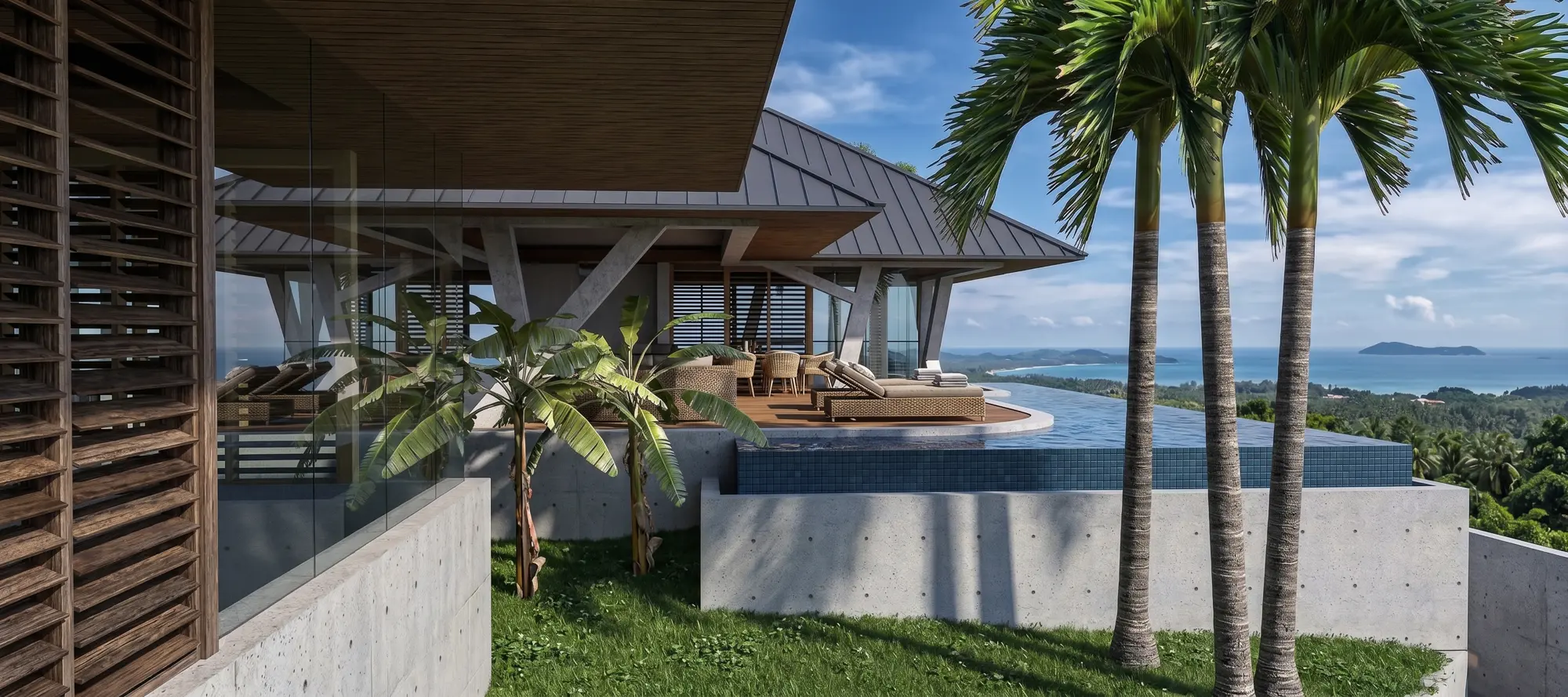
A home in the tropics invites a different way of living: open to breezes, shaded from the sun, connected to lush landscape and the sea. Island locations also bring unique challenges, including remote logistics, salt and humidity, strict approvals, and natural hazards. Here is how to plan for them.
Design for breezes, shade, and rain
In a warm, humid climate, architecture can do much of the work that air conditioning does elsewhere.
- Cross-ventilation. Position rooms and openings to catch trade winds and let air flow through the house.
- Deep overhangs and covered lanais. These provide shade, protect from sudden rain, and create outdoor living space.
- Open-air living. Pavilions, courtyards, and sliding glass walls blur the line between inside and out.
- Raised ceilings and high windows let hot air rise and escape.
- Roof design. Wide, well-drained roofs handle heavy rain, wind, and strong sun.
Our Canopy Pavilion in Kauai shows how a pavilion-style home can embrace its tropical setting.
Manage humidity, salt, and moisture
Humidity and salt air are hard on buildings. To make a tropical home last:
- Specify corrosion-resistant metals and fasteners, such as stainless steel or marine-grade finishes.
- Use materials that tolerate moisture, like treated or naturally durable wood, stone, concrete, and high-quality coatings.
- Detail the building envelope to keep water out and allow walls to dry.
- Include dehumidification and ventilation for enclosed spaces, closets, and storage.
- Plan for termite protection, which is standard practice in many tropical regions.
Understand island regulations and approvals
Islands often have layered regulations to protect shorelines, views, and natural resources. In Hawaii, for example, properties near the coast may be subject to special shoreline and management-area permitting, along with county zoning and design review. Other islands have their own planning systems. Approvals can take time, so start early and work with professionals who know the local process.
Check for natural hazards too: hurricane and tropical storm winds, flood and tsunami zones, volcanic or lava hazards in some areas, and sea-level rise along the shore. These affect where and how you can build.
Plan for logistics
Building on an island means longer supply chains. Materials and specialty products may arrive by ship, with long lead times and higher costs. Skilled labor can be limited and in demand. Consider:
- Ordering long-lead items such as windows and custom fixtures well in advance
- Using materials that are locally available or easy to ship
- Hiring an experienced local builder who understands the island’s conditions
- Building in schedule and budget contingency
For general budgeting and timing, see how much it costs to build a custom home and how long a custom home takes.
Respect the setting
The best island homes feel rooted in their landscape. Natural materials, a restrained palette, native plantings, and thoughtful siting preserve views and character. Sensitive design also considers neighbors, cultural context, and the local environment.
Frequently asked questions
Can you design a home in Hawaii if you are based on the mainland? Yes. We work with local builders, engineers, and consultants on remote sites. See working with an architect out of state.
Is it more expensive to build on an island? Often, because of shipping, labor availability, and regulations. A realistic budget and schedule should reflect this.
What materials work best in a tropical climate? Durable, moisture-resistant, and corrosion-resistant materials, protected from sun and salt, are the best choices.
To discuss a tropical or island site, contact Bjella Architects.