Miami is one of the harshest architectural environments in North America. Within a few miles of Biscayne Bay or the Atlantic Ocean, a house faces a relentless combination of salt-laden breezes, intense year-round UV radiation, 80% humidity, and wind-driven tropical rain.
Homeowners who choose exterior materials based on Pinterest boards from California or the Northeast often learn an expensive lesson within three to five years: steel railings bloom with rust, exterior wood siding warps and peels, cheap stucco streaks with mildew, and dark finishes chalk and fade under the subtropical sun.
Building a custom home in Miami that still looks extraordinary twenty years later starts with choosing materials that naturally belong here—and detailing them so water and salt never get trapped.
1. Concrete and Board-Formed GFRC: Built for the Coast
Concrete block and poured-in-place reinforced concrete are the structural backbone of South Florida residential architecture for good reason: they resist hurricanes, termites, rot, and humidity.
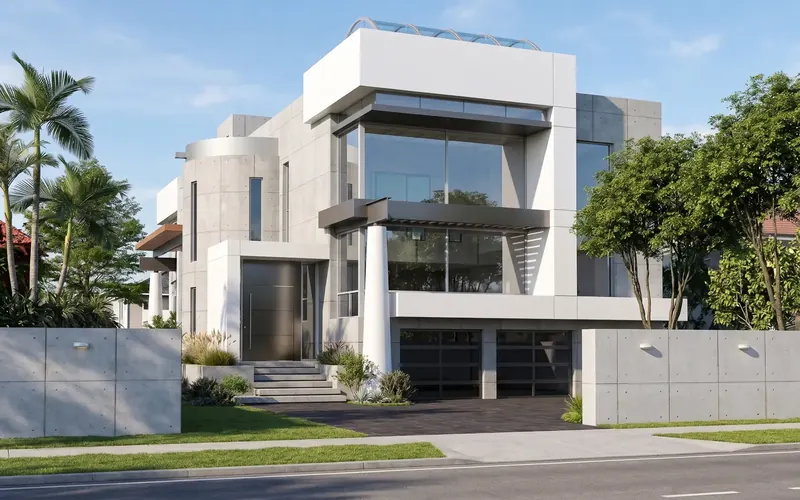
To keep concrete from looking sterile or flat, we often turn to board-formed concrete or board-formed GFRC (Glass Fiber Reinforced Concrete)—as seen on our Sky Deck House in Miami. By casting concrete against textured timber planks, you get the warm, organic grain of wood with the permanence and hurricane resilience of stone. Properly sealed and detailed with crisp drip edges, architectural concrete weathers gracefully and demands minimal upkeep.
2. Natural Coral Stone and Dense Limestone
South Florida sits on oolitic limestone, and local coral stone has been proving itself in Miami’s climate for over a century.
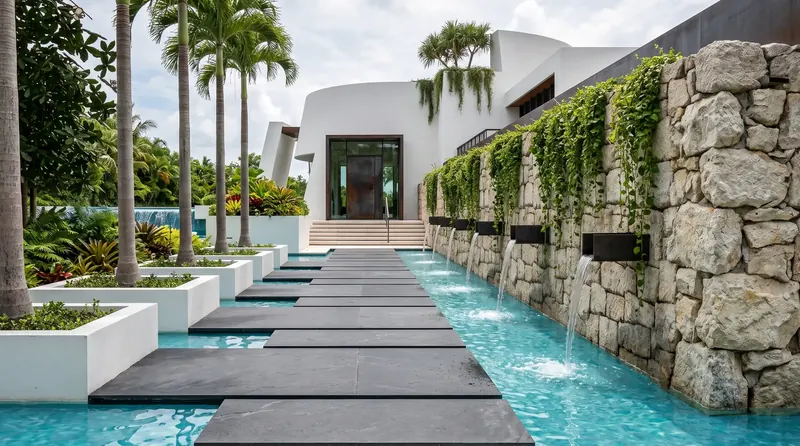
- Cool underfoot: Light-colored coral stone and honed limestone stay remarkably cool around pools and terraces even in midsummer sun.
- Slip-resistant and timeless: Their subtle fossilized texture provides natural grip when wet and develops a soft, organic patina rather than looking worn.
- Key detail: Always specify dense, freeze-free exterior-grade stone and breathable penetrating sealers—avoiding film-forming topical sealers that trap moisture and turn cloudy in Miami’s humidity.
3. Stucco—Done Properly, Not Minimally
Stucco is everywhere in Miami, yet poorly detailed stucco is one of the biggest maintenance headaches in South Florida. Hairline cracks allow salt moisture to reach interior reinforcing steel, leading to spalling, while flat ledges without proper overhangs collect dark algae streaks.
When stucco is part of the palette, longevity comes down to detailing: elastomeric or breathable mineral finishes, generous roof overhangs that shed rain away from walls, recessed control joints, and crisp metal drip edges at every parapet and window head.
4. Metals: Marine-Grade or Living Patina Only
Standard powder-coated steel and ordinary stainless steel (304 grade) corrode surprisingly fast near the bay or ocean. In coastal Miami, metal selection is non-negotiable:
- 316 Marine-Grade Stainless Steel: Essential for all exterior fasteners, door hardware, railings, and pool-area metalwork. Even 316 stainless benefits from occasional fresh-water rinsing to prevent surface “tea staining.”
- Marine-Grade Aluminum (with AAMA 2605 finish): The gold standard for Miami-Dade impact window and sliding door frames, offering superior resistance to salt spray and UV chalking.
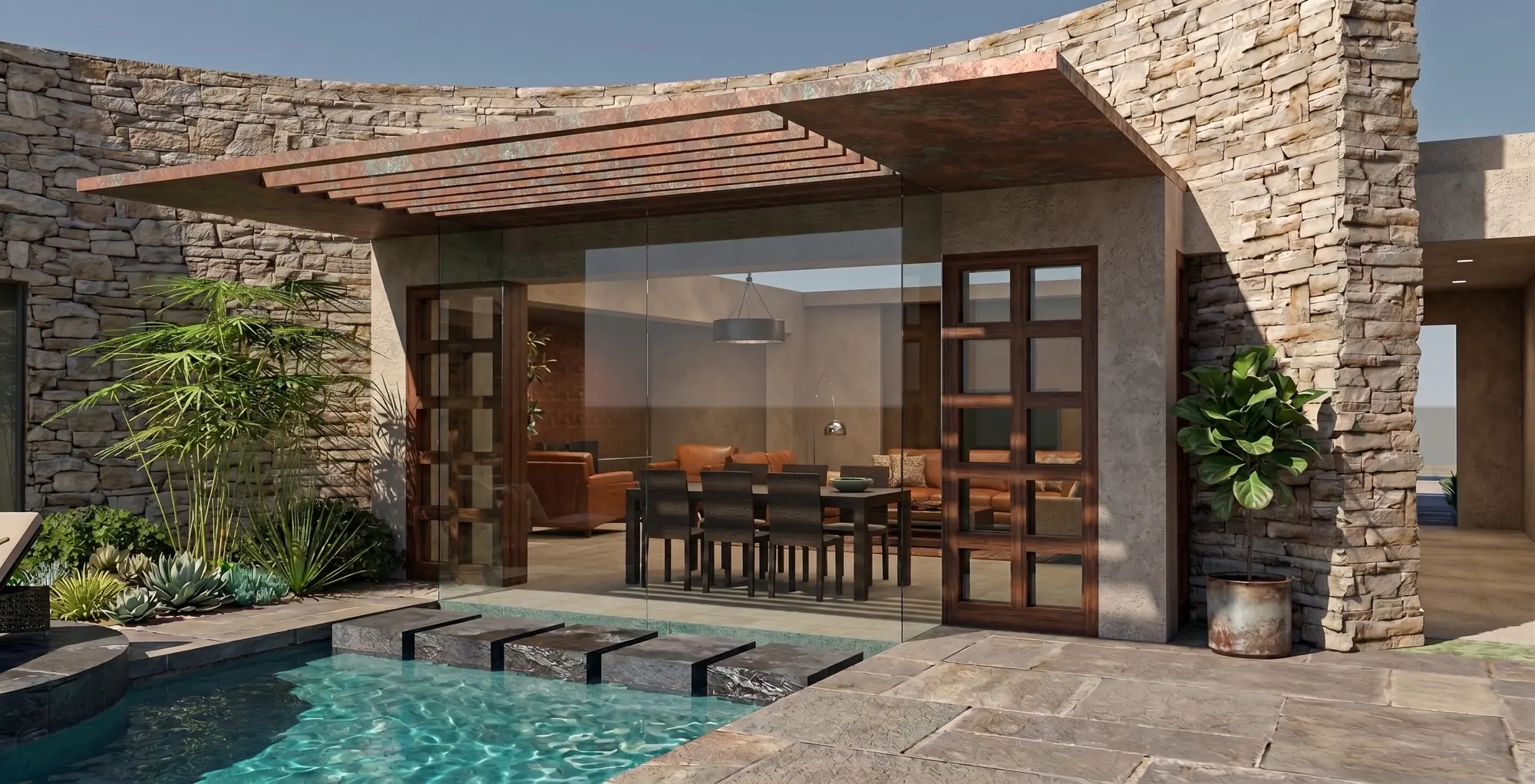
- Architectural Copper and Bronze: Rather than fighting corrosion, living metals like copper and bronze oxidize naturally into a protective patina that shields the metal beneath—bringing rich, warm character to pergolas, roof accents, and custom lighting.
5. Exterior Wood: Choose Dense Hardwoods and Keep Them Sheltered
Natural wood brings irreplaceable warmth to modern Miami architecture, especially on soffits, ceilings, and privacy screens—but softwoods like pine or unsealed cedar fail quickly in South Florida’s sun and rain.
- Best performers: Naturally oily, ultra-dense tropical hardwoods such as Ipe, Teak, Cumaru, and Burmese or Peruvian hardwood species, along with thermally modified wood for protected vertical applications.
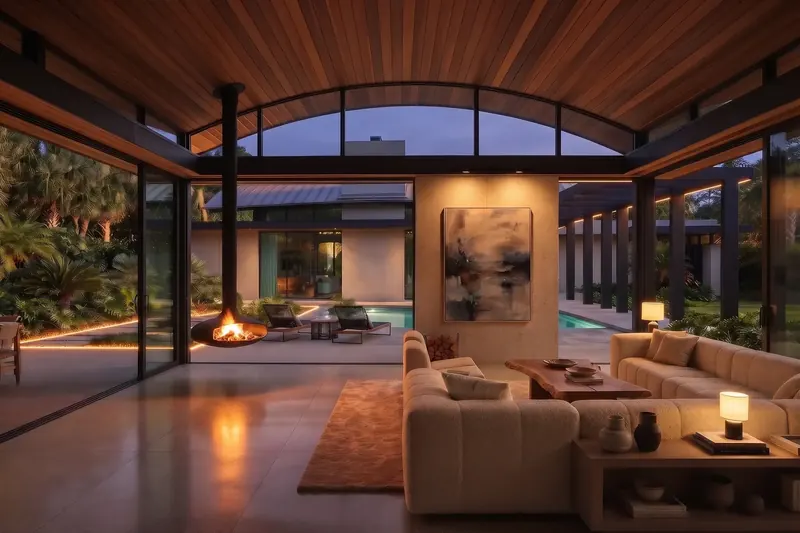
- Smart placement: Use real wood where it is naturally sheltered—on undersides of deep roof overhangs, covered lanai ceilings, and recessed entry doors—where it is protected from direct afternoon UV and standing rain. Expect exterior wood in Miami to either be oiled on a regular maintenance cycle or allowed to weather intentionally to a silvery coastal gray.
- Low-maintenance alternatives: Where a client wants the warm look of wood on a fully exposed western facade with zero re-oiling, high-end architectural wood-grain aluminum slats or porcelain timber planks can offer a crisp, durable alternative.
6. Roofing and Glazing Built for HVHZ Conditions
- Roofing: Standing-seam marine-grade aluminum roofs, clay or concrete tile, and multi-ply modified bitumen or high-reflectance TPO flat roofs (paired with tapered insulation so water never ponds) handle Miami’s wind uplift and solar heat load far better than standard residential systems.
- Impact Glazing: Beyond meeting Miami-Dade NOA large-missile impact codes, specify low-E, solar-control laminated glass that blocks infrared heat gain without turning the glass overly dark or green—keeping rooms bright while cutting cooling loads.
Detailing Matters as Much as the Material
Even the best material on earth will fail if water sits on it. In Miami, durability is half material selection and half architectural detailing: sloping every horizontal ledge away from the house, isolating dissimilar metals so they don’t trigger galvanic corrosion, ventilating behind exterior cladding, and giving the roof enough overhang to shelter the walls below.
When materials are chosen for how they actually age in South Florida, a custom home doesn’t just survive Miami’s climate—it grows richer with every passing year.
Browse our coastal Florida residences in the Gallery, read our guide to Tropical Modernism Beyond the White Box, or contact Bjella Architects to plan your Miami home.