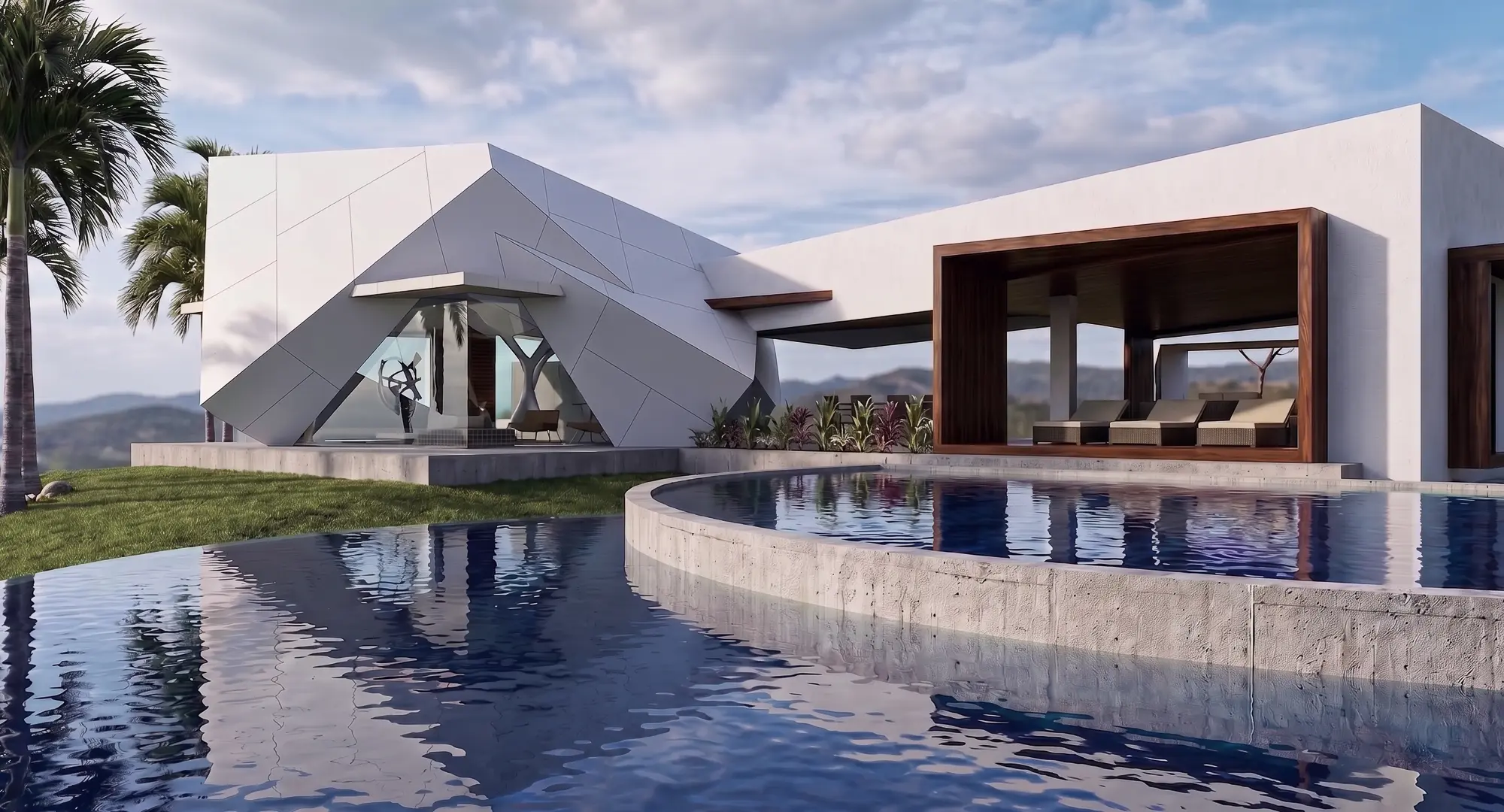
Everyone moving to or building in Miami dreams of effortless indoor-outdoor living: sliding glass walls pushed wide open, morning coffee on the terrace, and long evenings beside the pool.
Yet walk through dozens of newly built South Florida homes in July or August and you will notice something telling—the outdoor furniture is pristine because nobody sits on it. Unshaded travertine decks radiate heat like a griddle, west-facing glass walls turn living rooms into solar ovens, and stagnant pools feel like warm bathwater.
The problem isn’t Miami’s climate. The problem is architecture designed for a magazine photograph rather than for South Florida’s actual sun, humidity, and afternoon downpours. When a home is shaped around Miami’s real microclimate, its outdoor spaces become usable nearly every day of the year.
1. Respect the Sun Path—Especially the Western Exposure
In Miami, sun control is the difference between a home that feels naturally serene and one that fights its air conditioning 10 months a year.
- Tame the west and south elevations: Afternoon western sun sits low in the sky and carries intense heat. Rather than placing vast, unprotected glass walls facing due west, we orient primary glazing to capture softer northern and eastern light—or shield western exposures with deep overhangs, vertical louvers, and slatted wood screens that block low-angle glare while preserving views.
- Calibrate overhang depth: A token two-foot roof edge does almost nothing in subtropical latitudes. Generous, deeply cantilevered overhangs and sweeping soffits keep high summer sun off the glass entirely, while letting lower, welcome winter sunlight slip into the rooms in January.
2. Design Outdoor Rooms That Work in Rain and Heat
A patio with a freestanding umbrella is not an outdoor room. In Miami, summer brings both fierce UV exposure and sudden, sideways tropical rainstorms.
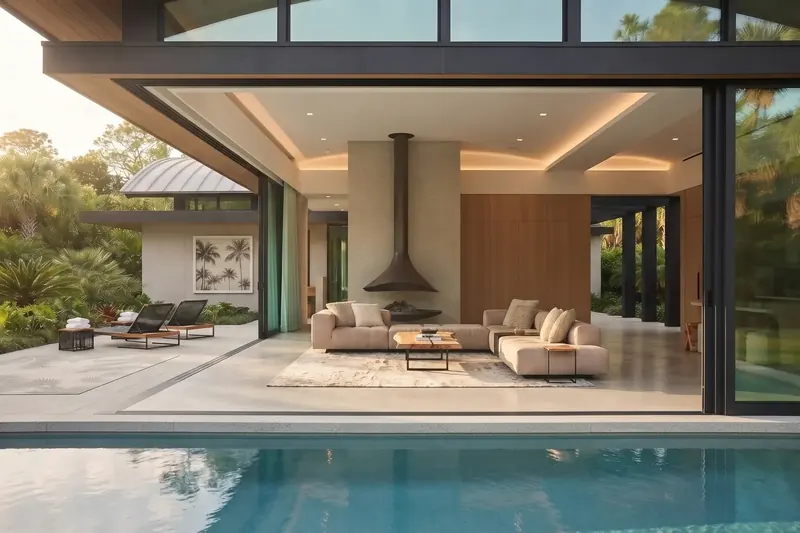
True outdoor living requires architectural shelter:
- Deep, covered lanais: Extending the roof plane generously over outdoor dining and lounge zones protects furnishings from sudden squalls and drops the perceived temperature immediately.
- Ceiling fans and hidden misting or cooling: Integrating quiet, architectural ceiling fans into warm wood soffits keeps air moving across shaded terraces—often making an 88-degree shaded porch feel completely comfortable.
- Pod and courtyard layouts: Breaking a large home into interconnected pavilions around a central pool—as in our Draped Modern House—lets one wing cast natural afternoon shadow across the terrace and water while framing breezy, sheltered outdoor pockets.
3. Capture Prevailing Breezes and Cross-Ventilation
From October through May, Miami enjoys some of the finest weather in North America. Even in warmer months, coastal breezes from the east and southeast offer real relief—if the house is shaped to catch them.
- Cross-ventilation paths: Placing operable openings on opposite or adjacent walls allows coastal air to pull cleanly through the home rather than stalling in dead-end rooms.
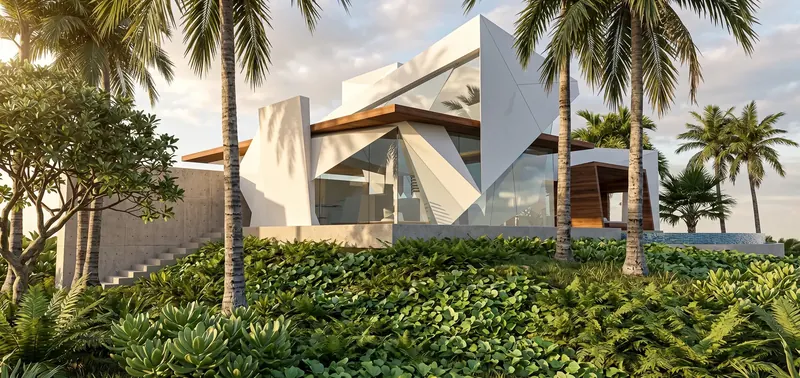
- High-level heat release: Sloped, faceted ceilings (as in our Facets and Angles House) and high clerestory windows allow rising warm air to escape upward rather than pooling over the living space.
- Elevated terraces: Raising an outdoor deck above surrounding walls and hedges—like our Sky Deck House—taps into cleaner, stronger breezes that never reach an enclosed backyard at grade.
4. Use Water as a Cooling Architectural Element
In subtropical architecture, water is far more than a place to swim—it is an active microclimate tool.
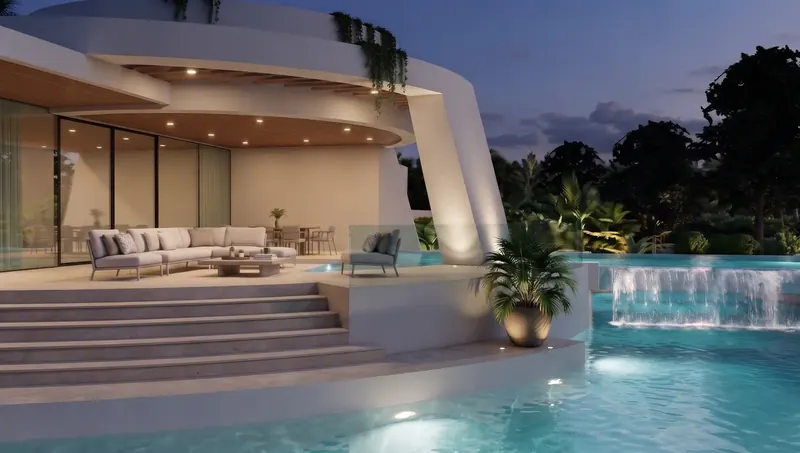
- Moving water cools the air: Elevated reflecting ponds spilling into a main pool (as in our Miami Seashell House), architectural water walls, and shaded swim-under waterfalls introduce gentle evaporative cooling and soothing acoustic masking against neighborhood noise.
- Shade part of the pool: Designing a portion of the pool beneath a cantilevered roof, pergola, or lush palm canopy keeps the water noticeably cooler in August and gives swimmers a break from direct sun.
- Heat-smart paving: Choosing light-colored, porous natural stone—such as honed coral stone or pale limestone—keeps pool decks comfortable under bare feet even at midday.
5. Balance Open-Air Living With Humidity-Smart Interiors
Indoor-outdoor living only works if the transition back inside doesn’t overwhelm the house with moisture. Pairing wide pocketing glass walls with dedicated dehumidification HVAC systems, airtight Miami-Dade impact glazing, and moisture-tolerant interior finishes ensures that when you close the doors on a humid August afternoon, the interior recovers quickly and stays crisp—never clammy.
Architecture That Works With South Florida
When shade, breeze, water, and orientation are woven into the architecture from the first sketch, your home stops fighting the Miami climate and starts celebrating it. The terraces get used, the cooling bills drop, and the house feels alive in every season.
Explore our Miami and South Florida projects in the Gallery, read our guide to Designing a Custom Florida Home, or contact Bjella Architects to discuss your site.