Most people are drawn to more than one style. You may love the calm of Japanese design, the craft of an old farmhouse, and the openness of a modern home all at once. Handled carelessly, mixing styles looks confused. Handled well, it produces a home that feels personal, original, and entirely your own.
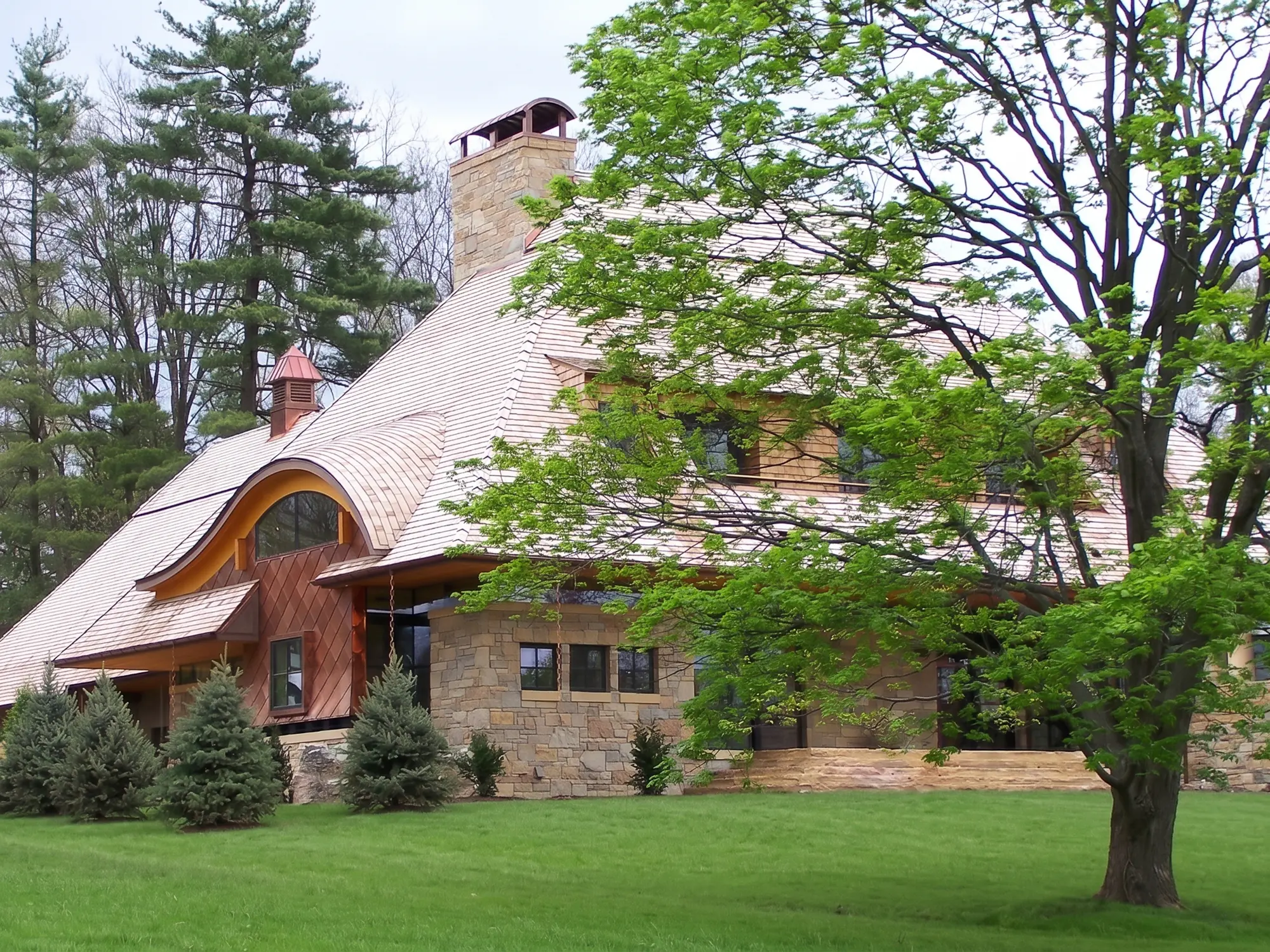
Our Copper Clad Eclectic Home in St. Louis, Missouri was designed for a couple with a vision to merge four distinct styles. The architects invented a new style that merges Shinto, Shaker, Craftsman, and Contemporary elements. Here is what that project, and our experience more broadly, can teach about blending styles successfully.
Start with what the styles share
Styles that look different on the surface often share deeper values. In general, the combinations that work best are built on common ground, such as a love of craftsmanship, a respect for natural materials, a connection to nature, or a taste for simplicity.
In the Copper Clad home, the couple’s appreciation for both tradition and nature’s beauty tied the four styles together. Shaker and Craftsman traditions share a reverence for handwork. Shinto architecture is rooted in a connection to nature. Contemporary design adds openness, glass, and light. Finding the thread that runs through your own favorites is the first step.
Give each style a job
Blending does not mean sprinkling every style everywhere. It works better when each influence has a role and a place.
- The roof. The house’s distinctive feature is a roof that seems suspended in mid-air, hovering above the structure on a transparent layer of glass. The effect is modern, and it also pays homage to the Shinto belief in the connection between the earthly and the divine.
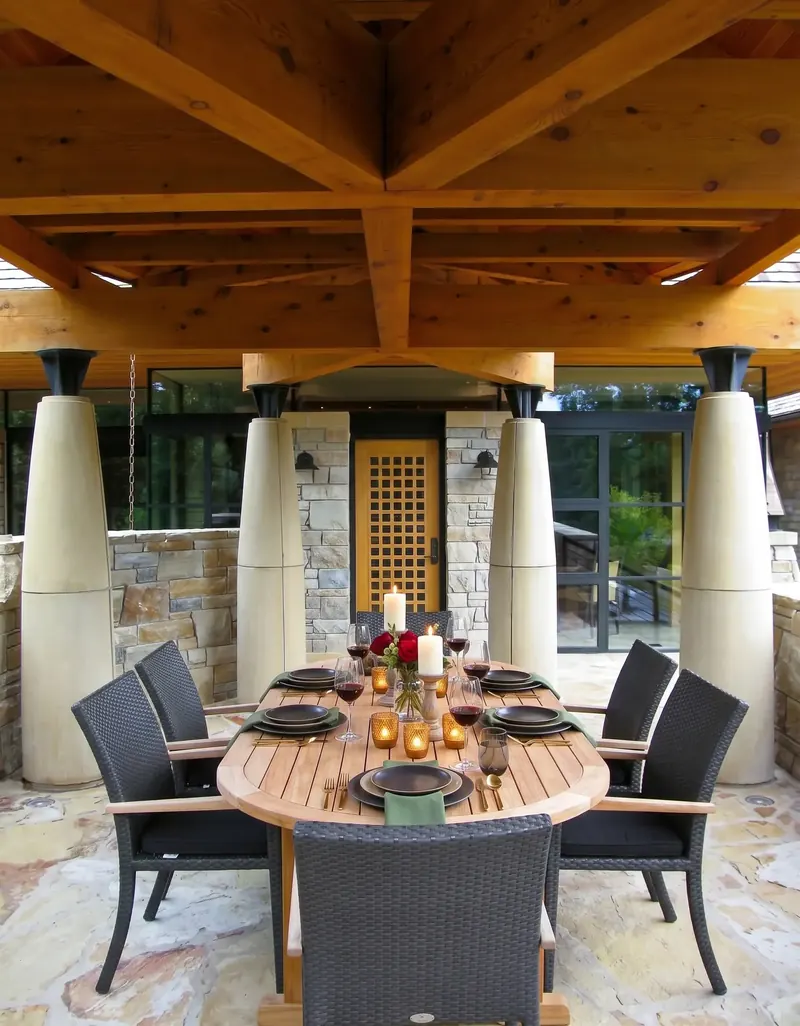
- The pavilion. The outdoor dining pavilion, nestled in the landscape, is a poetic homage to Shinto architecture through its careful layering of exposed beams.
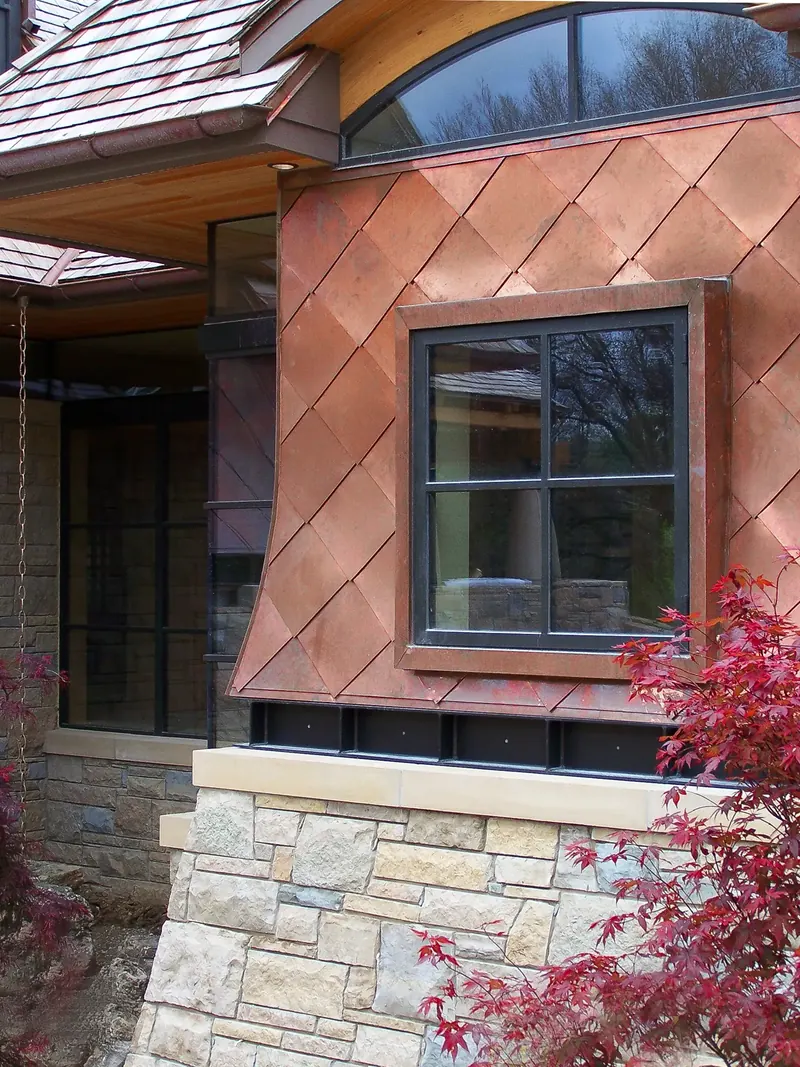
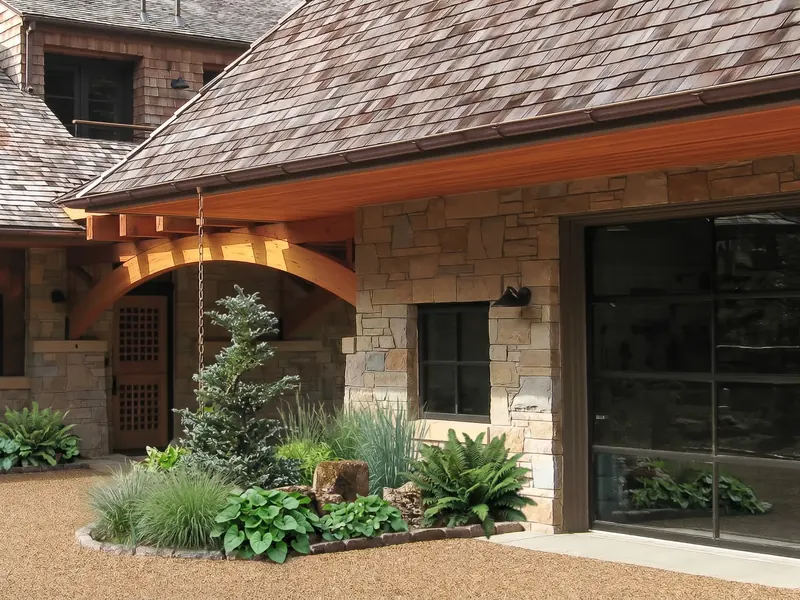
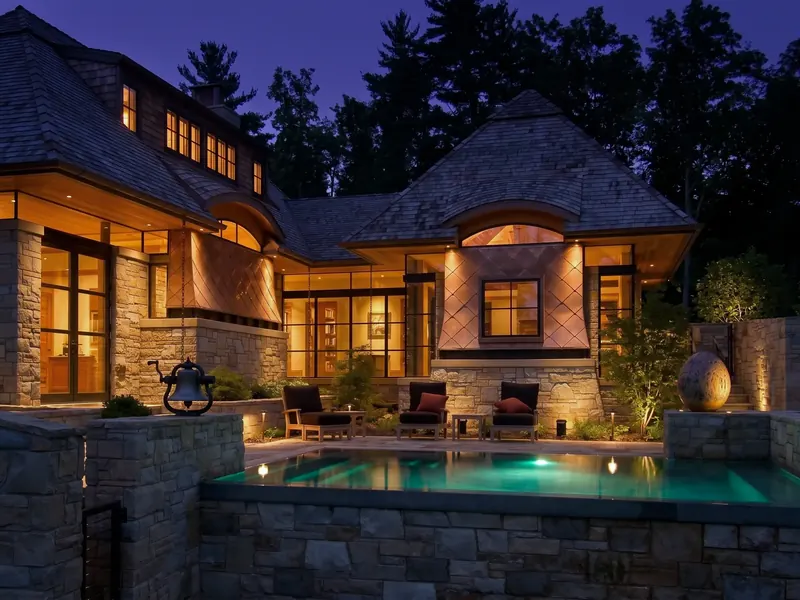
- The exterior. Stone and copper panels, reminiscent of fish scales, allude to the craftsmanship of Shaker and Craftsman traditions, with a nod to nature.
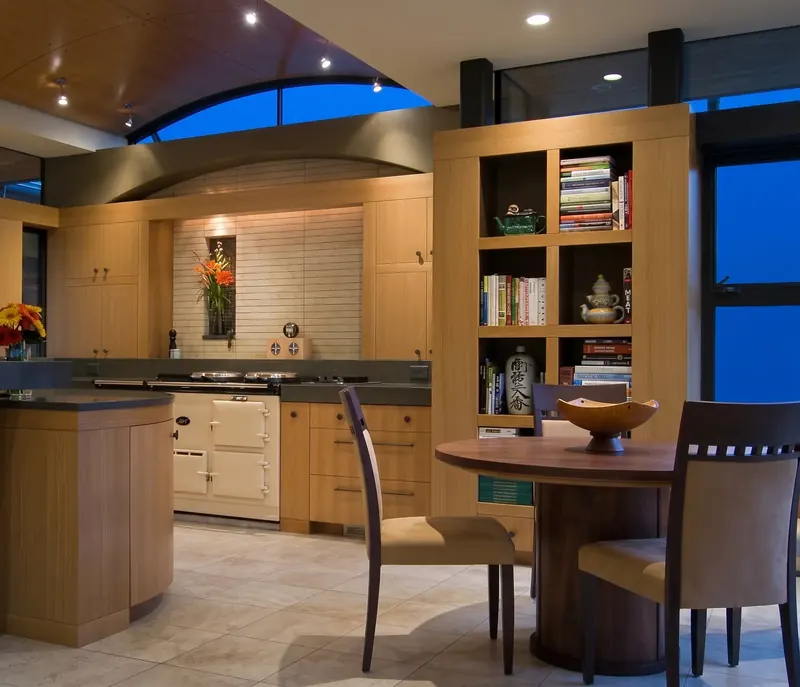
- The interior. In the kitchen, an arched wood ceiling terminates in a cast iron stove accentuated by a flower niche. Custom-made furniture reflects Shaker simplicity, and intricate modern woodwork adds detail.
When each style has a clear role, the house reads as one design with several voices rather than several designs competing.
Let one idea lead
A general principle: choose a dominant idea and let the others support it. Without a lead, a mixed-style house can feel like a collage. The lead can be a form, a material, a mood, or a client’s story, but there should be something the eye and the mind can hold onto.
Limit the palette
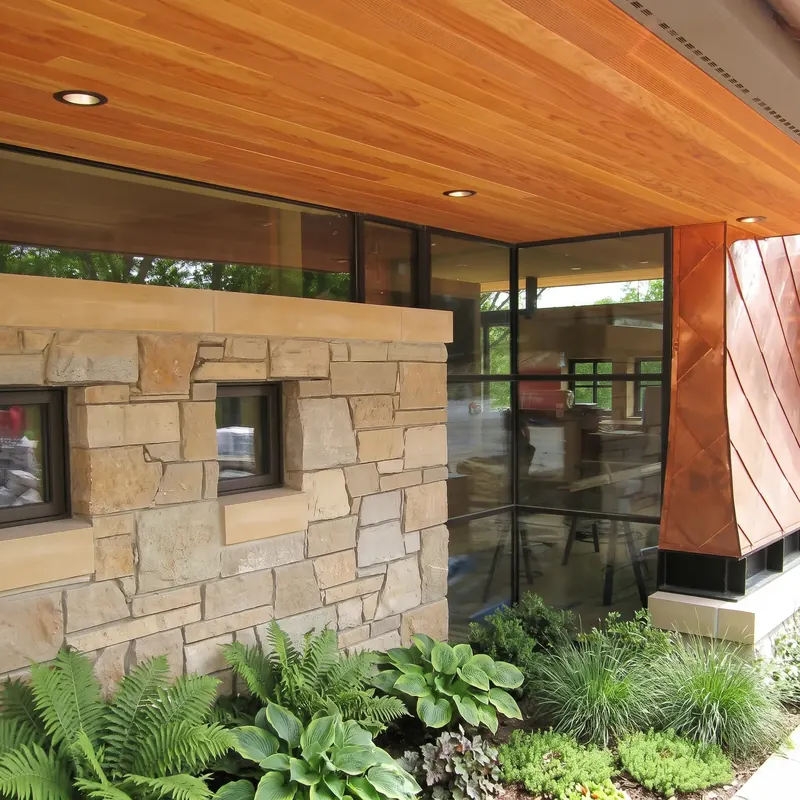
The fastest way to keep a mixed-style home calm is to restrict the materials. In this house, stone, copper, and wood, along with glass, carry the design from the exterior to the interior. A small set of materials, used consistently, ties different influences together.
Repeat a motif
Repetition creates unity. Arches and curves recur throughout the Copper Clad home: in the curved roofline, the arched clerestory over the kitchen, an arched window, and an arched timber porte-cochere. A repeated shape, proportion, or detail is a thread that connects rooms and styles.
Craft the details
When styles are blended, details do much of the work. Custom furniture, woodwork, lighting, and hardware are where an eclectic house either feels deliberate or feels accidental. Designing the interior with the architecture, as we do, makes sure these details come from the same hand.
Use light to bring it together
Light can unify what form and material cannot. As the sun sets, the Copper Clad home transforms into a glowing beacon, casting an aura that blends the past and present. Thoughtful lighting makes a mixed-style home feel like one place at night as well as by day.
Common mistakes
These are general observations.
- Too many materials. Every new material weakens the whole.
- Copying instead of translating. Literal imitation of a historic style can feel like a theme park. Reinterpretation feels alive.
- No hierarchy. If everything is a feature, nothing is.
- Ignoring the site and climate. A style has to suit the land and the weather.
- Following trends. A home built around your own story ages better than one built around a moment.
Another way to blend: classical and modern
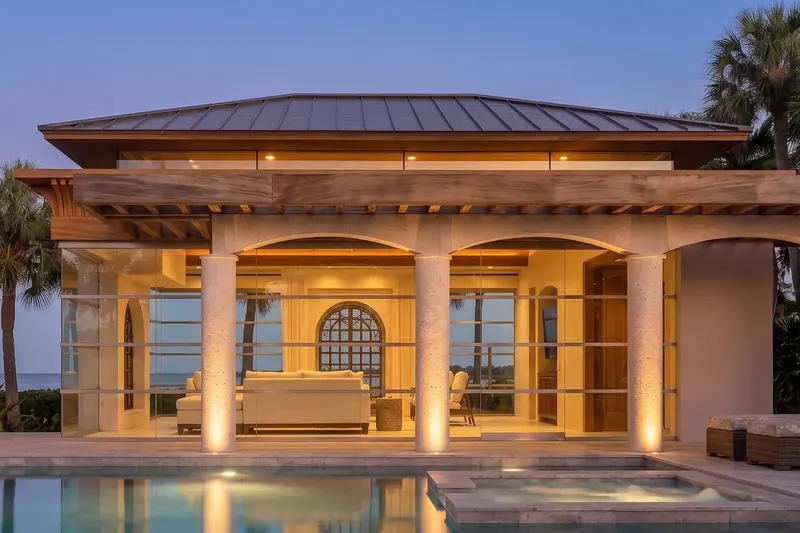
Blending does not require four styles. Our Modern Classical Pavilion & Home in Palm Beach pairs classical proportions, arches, and columns with simplified detailing and contemporary materials. For background on how these styles differ, read modern vs. contemporary vs. classical architecture.
Start with your story
The best eclectic homes begin with a client’s story: what you love, where you have been, and how you want to live. If you are drawn to more than one style, talk with us about how to bring them together, or see how we work on our Services page.
(delete before publishing): this article would be stronger with a few details only you know, such as how the couple’s four styles were chosen, how the floating roof is built, and what the design process was like. Send me your notes and I will work them in.